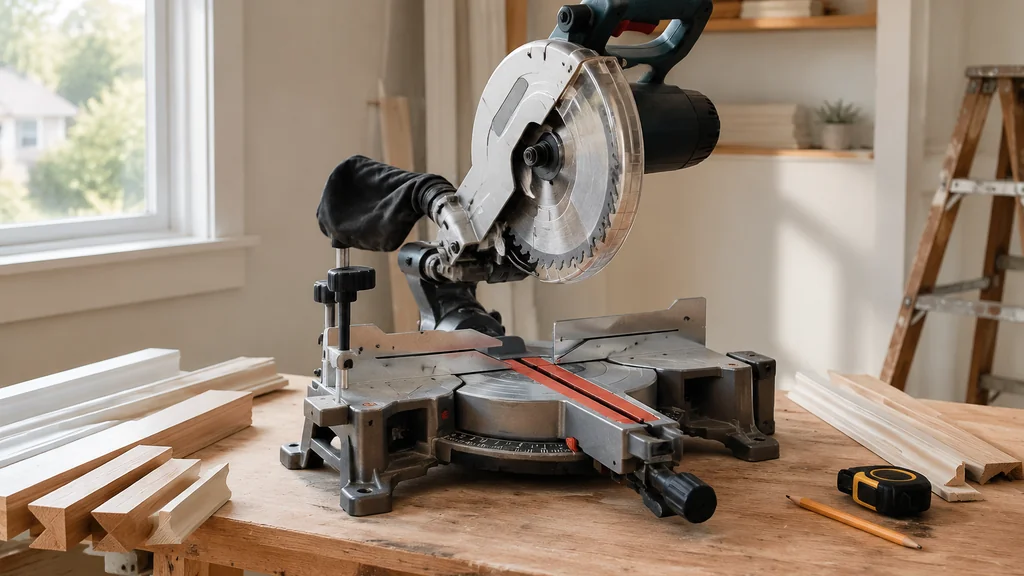
A miter saw’s size is its blade diameter, and that number sets the largest board the saw can cut through in one pass. The bevel type tells you which way the cutting head tilts: a single-bevel saw leans one direction, a dual-bevel saw leans both. Match both to the trim and framing you actually plan to cut, and you avoid buying a saw that stalls on the first wide crown molding you bring home.
What the size numbers actually mean
The size on the box is the blade diameter, and everything else follows from it. A bigger blade reaches deeper and cuts wider, so it handles taller baseboard and wider stock, including MDF and Plywood. A smaller blade cuts lighter material and travels easily to a job up the stairs.
Crosscut capacity is how wide a board the saw cuts at a square angle. Vertical capacity is how tall a board it cuts with the head upright. Manufacturers list both in the spec sheet, and those figures tell you more than the blade size alone.
Blade sizes form a rough ladder:
- Small blades suit trim, picture frame stock and light shelving. They are light enough to carry in one hand and store on a shelf.
- Mid-size blades are a common all-rounder for trim, deck boards and small framing.
- Large blades handle wide crown, thick posts and dimensional lumber. Their weight makes a proper stand useful.
Two saws with the same blade can have different capacities because of how the head slides and how the fence is built. Read the spec sheet before you pay.
Sliding or fixed head
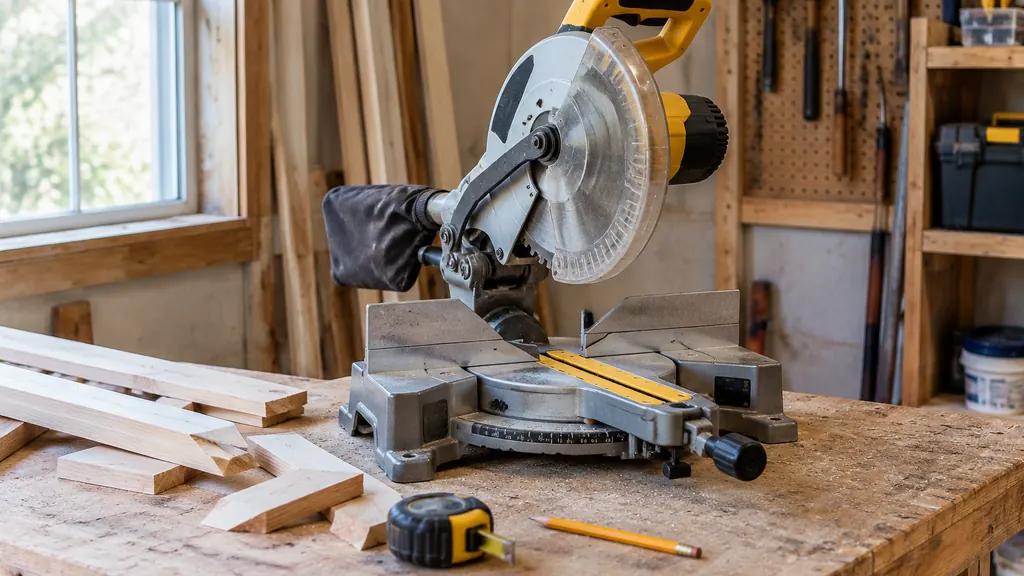
A fixed-head saw chops straight down. It is simple, inexpensive and stiff, and it handles narrow trim made from Pine or Oak. Its limit shows when you lay a wide board flat.
A sliding saw runs the head along two rails, so the blade travels forward as it drops. That extra travel adds crosscut capacity without a bigger blade. It also adds weight, more places for play to develop, and a higher price.
Wide baseboard, stair stringers and shelving may need the extra crosscut capacity of a sliding saw. For trim and small stock, a fixed head is lighter and easier to store.
Single bevel, dual bevel, and what they change
A bevel is a tilt of the cutting head away from square. On a single-bevel saw the head tilts to one side only. On a dual-bevel saw it tilts both ways, usually with a detent at common angles.
That difference matters when cutting crown molding. Crown sits at an angle against the wall and ceiling, so the cut combines a blade tilt with a table rotation. With a single-bevel saw, you flip the workpiece for half the cuts. This can be awkward with long stock and makes it easier to lose track of the reference edge.
A dual-bevel saw lets you keep the molding face up and the same reference edge against the fence for both halves of a joint. Fewer flips can mean fewer scrapped pieces.
A dual-bevel head has more mechanism, which adds cost and weight when lifting it onto a bench.
Setting up and cutting a compound angle
Work through this in order, and check the saw before the first cut of the day.
- Unplug the saw or pull the battery before you change anything.
- Set the saw on a flat, stable surface at a comfortable working height.
- Check the Carbide-Tipped blade for missing teeth, cracks or pitch buildup, and replace it if it is damaged.
- Verify the fence is square to the blade with a try square, and adjust it if it is off.
- Set the bevel to zero and confirm the head returns to square against the stop.
- Set the miter angle for your joint, then lock the table.
- Set the bevel angle and lock the head.
- Bring the blade down with the motor running, let it reach full speed, and cut at a steady rate without forcing it.
Support long stock at both ends so it cannot drop and pinch the blade. A pinch is how blades break and how hands get pulled toward the cut. Clamp the workpiece against the fence whenever the cut allows it.
If you are building a jig or a bench to hold the saw, a Forstner bit leaves a clean flat-bottomed hole for the bolts, which sits better than a spade bit in hardwood.
Matching the saw to the job
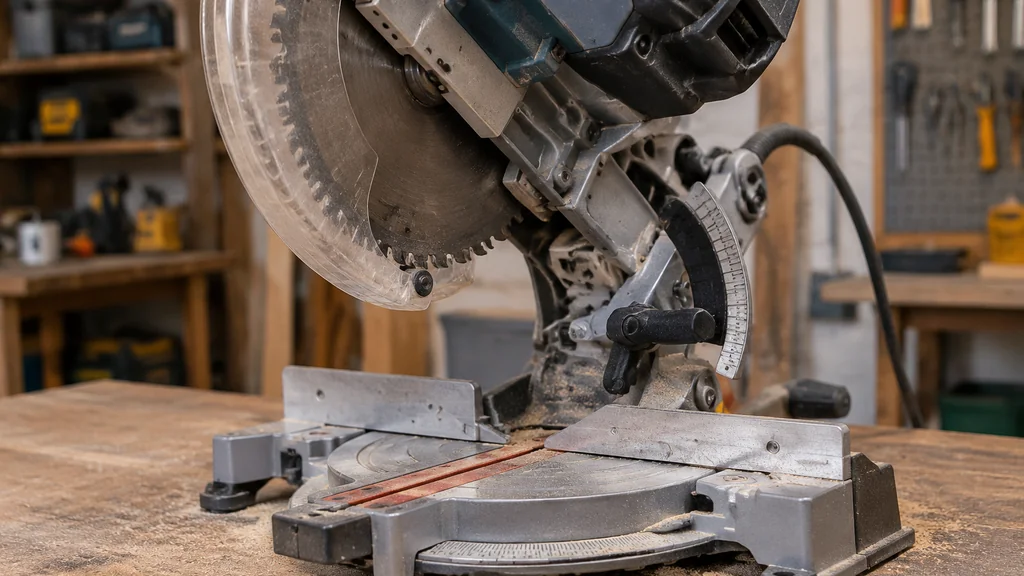
Choose a saw based on the work you do most. A trim carpenter cutting baseboard and casing all day may need a sliding dual-bevel saw with a solid stand. For hanging a few doors and fitting shelves, a lighter fixed-head saw is easier to set up and store.
Weight matters. A heavy saw that lives on a shelf and comes out twice a year may be harder to use. If it stays on a bench, weight is less of an issue.
Blade choice affects the cut. A fine-tooth Crosscut Blade leaves a cleaner edge on trim, while a coarser Framing Blade clears chips faster in framing lumber. Match the tooth count to the material and check the maximum speed rating on the label. A blade rated below the saw’s speed is unsafe to fit.
For a cordless saw, keep spare batteries charged and stored properly. A cold pack can lose capacity in a garage.
Safety and the mistakes that cost fingers
A common mistake is cutting small offcuts freehand. A short piece has nothing to hold it, so the blade can grab and throw it. Clamp it or cut it with a handsaw.
A miter saw blade coasts after the trigger is released. Wait for it to stop completely before reaching past it.
Do not remove the guard or tape it back because it catches on tall stock. If it catches, adjust the setup. Also check the blade’s rotation direction and speed rating. Keep the cord clear of the cut path, and do not cut wet material, wood painted with lead paint, or stock containing nails.
When to call a pro
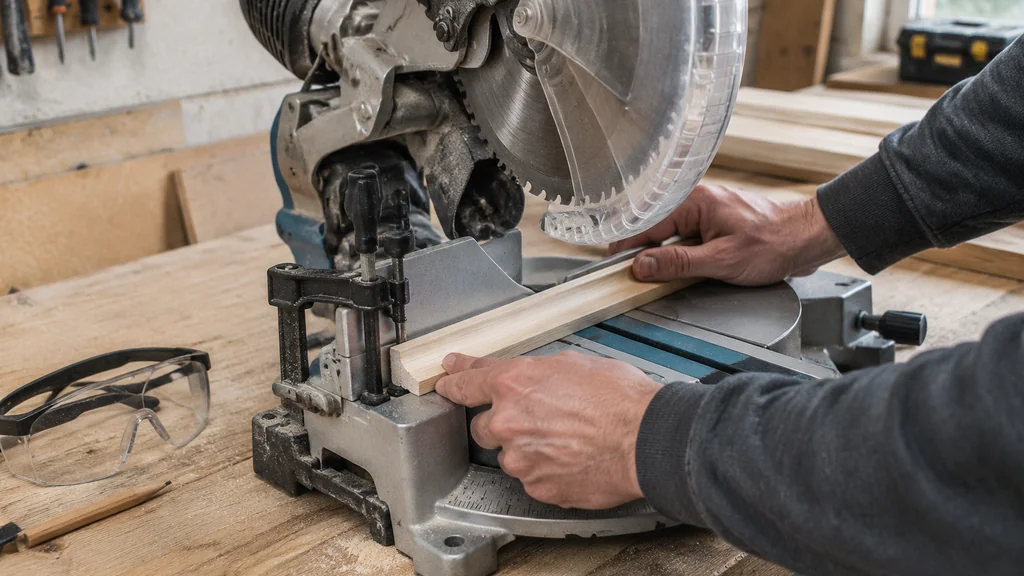
Most trim and framing cuts are within reach of a careful homeowner. Call a professional for structural cuts, load-bearing framing, or large crown runs in tall rooms where the stock is long and the setup is awkward. If you are not confident reading a framing plan, bring in someone with that experience.
Miter Saw Sizes and Bevel Types FAQ
What size miter saw do I need for baseboard?
A mid-size saw with a sliding head handles most baseboard in one pass. Measure the height of your baseboard first, then check the saw’s vertical capacity in the spec sheet. If the board is taller than the capacity, you will need to cut it on the flat or use a bigger saw.
Is a dual-bevel saw worth the extra money?
It is worth it if you cut crown molding or do a lot of compound angles. The dual-bevel head lets you keep the same reference edge against the fence for both halves of a joint, which cuts down on flipped and scrapped pieces. For simple square cuts on trim, a single-bevel saw does the same job for less.
Can I cut metal or masonry with a miter saw?
Only with a blade rated for that material and a saw rated for the speed. Wood blades are not made for metal or masonry and can shatter. Check the label on the blade and the saw’s maximum speed before you fit anything other than a wood-cutting blade.
Why does my miter saw cut at an angle when it is set to zero?
The fence or the bevel stop is out of adjustment, or the blade is flexing because you are feeding too fast. Check the fence against the blade with a try square, reset the bevel stop, and let the blade reach full speed before it touches the wood. A dull blade also pushes the cut off line.
Do I need a stand for a large miter saw?
A large saw is heavy enough that a proper stand makes it safer and more accurate to use. A stable stand at working height keeps the saw from rocking and gives you somewhere to support long stock. For a small saw used on a bench, a stand is optional.
Thank you for reading!