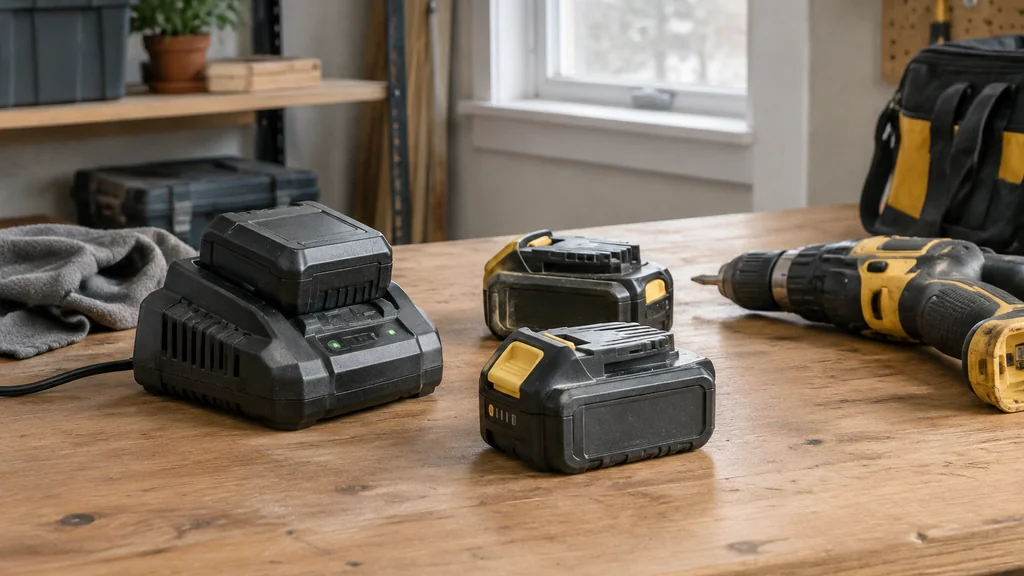
Lithium-ion packs do not die from hard work, they die from heat, deep discharge and long naps at full charge. Charge them cool, store them half full, and keep them out of a hot truck cab, and a pack will outlast the tool it came with. The rest is knowing which habits actually matter and which ones are folklore.
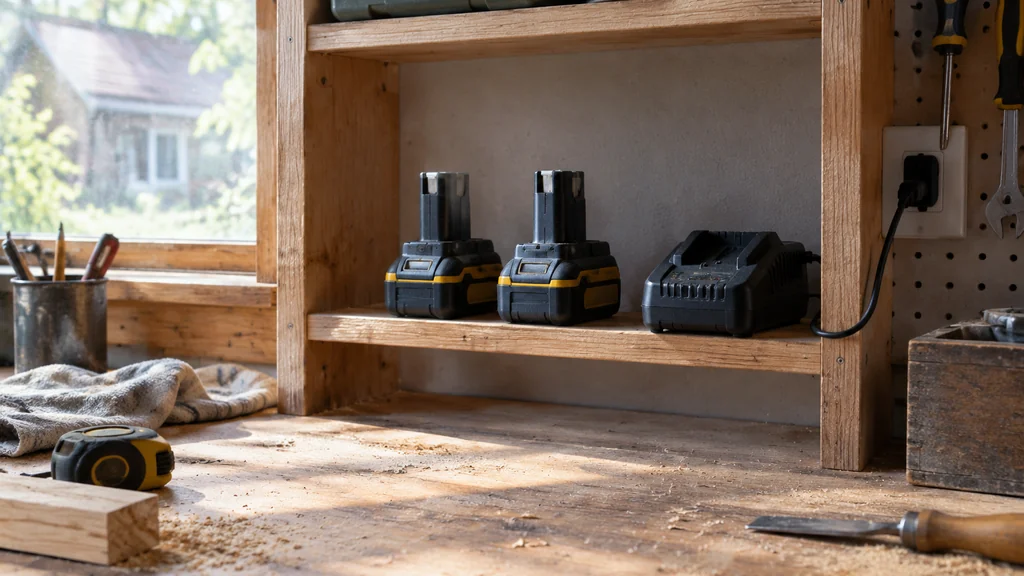
What Actually Wears A Pack Out
Every pack is a set of cells with a management board that watches voltage and temperature. The chemistry ages on a clock from the day it was made, and that clock runs faster when the cells sit hot or sit full. A pack left at 100 percent in a warm shop loses capacity faster than one cycled hard and stored at half charge.
Heat is the big one. A charger that finishes a pack and keeps trickling current into it warms the cells for hours. So does a black toolbox in the bed of a truck in July. If you want one rule to remember, it is this. Keep the pack cool and it will forgive most of your other sins.
Cold is gentler but it lies to you. A frozen pack shows low voltage and a charger may refuse it until it warms to room temperature. Never force a cold pack onto a fast charger to “wake it up.”
Charging Rules That Matter
Use the charger made for the pack. The board inside the pack and the board inside the charger talk to each other, and a mismatched pair can push current the cells were not built for. Off-brand chargers are where most of the horror stories start.
Let a hot pack cool before it goes on the charger. A pack pulled from a circular saw after a long cut in August can be too warm for the charger to accept, and that is the charger protecting you.
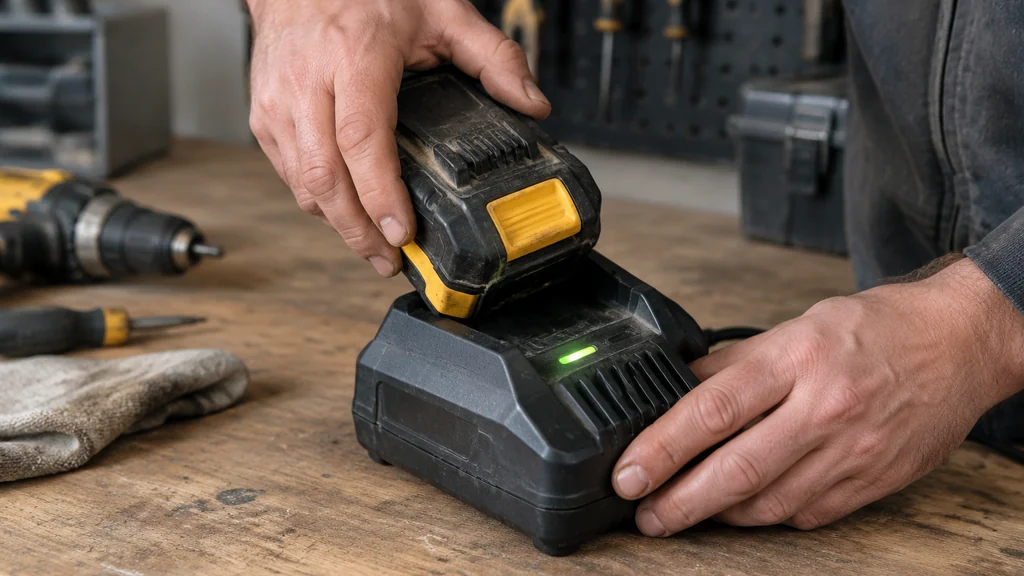
Take the pack off when the light says done. Modern chargers taper the current and stop, but a pack left on the dock for a week still sits at full voltage, which is the state that ages it fastest.
A partial charge is fine. These packs have no memory, so topping up from half is normal and harmless.
The Main Procedure: Charge, Store, Rotate
Storage: Half Charge, Cool And Dry
The best storage charge sits somewhere in the middle of the range, not at the top and not at the bottom. Manufacturers ship packs partly charged for exactly this reason. If you have packs you will not touch until spring, run them down to about half on a tool first, then shelve them.
Keep them off a concrete floor in a damp basement and out of a metal drawer where a stray wrench can bridge the terminals. A short across the contacts will ruin a pack in seconds and can start a fire. A plastic bin on a shelf is fine.
For long storage, check the packs every few months and bring them back to half if they have drifted down. A pack that self-discharges to nothing and sits there for a year may never take a charge again.
Cold Weather And Jobsite Reality
Contractors in Minnesota and Alberta know the drill. A pack that lived in the truck overnight comes out sluggish, and the fuel gauge reads lower than it is. Warm the pack in your jacket or a heated cab before you expect full power. Once the cells are back near room temperature, the capacity returns.
Do not charge a frozen pack. Let it warm first, or the charger will either refuse it or push current into cells that cannot take it safely.
If you work outside all winter, bring packs in at night. It costs you nothing and saves a season of capacity.
When A Pack Is Done
A pack that charges in a few minutes, dies in a few more, or will not hold a charge past a day is finished. So is one that has swollen, and a swollen pack is a fire risk you should not ignore. Take it to a household hazardous waste site or a retailer that collects them. Do not bin it and do not try to open it.
Rebuilding a pack is a job for someone who knows cell matching and spot welding. For most people the math favors a new pack.
Matching Packs To Tools And Chargers
Stay inside one battery platform if you can. A single charger and a handful of packs beats a drawer full of orphan chargers. When you buy a kit, check the amp-hour rating against the work. A compact pack is lighter for overhead work, and a big pack is worth the weight for a saw.
If you are setting up a bench for this kind of work, the same patience applies to fasteners and bits. Setting a screw without splitting the drywall takes the right anchor and the right depth, and the same care pays off when you screw into drywall anchors.
Tools And Shop Habits That Help
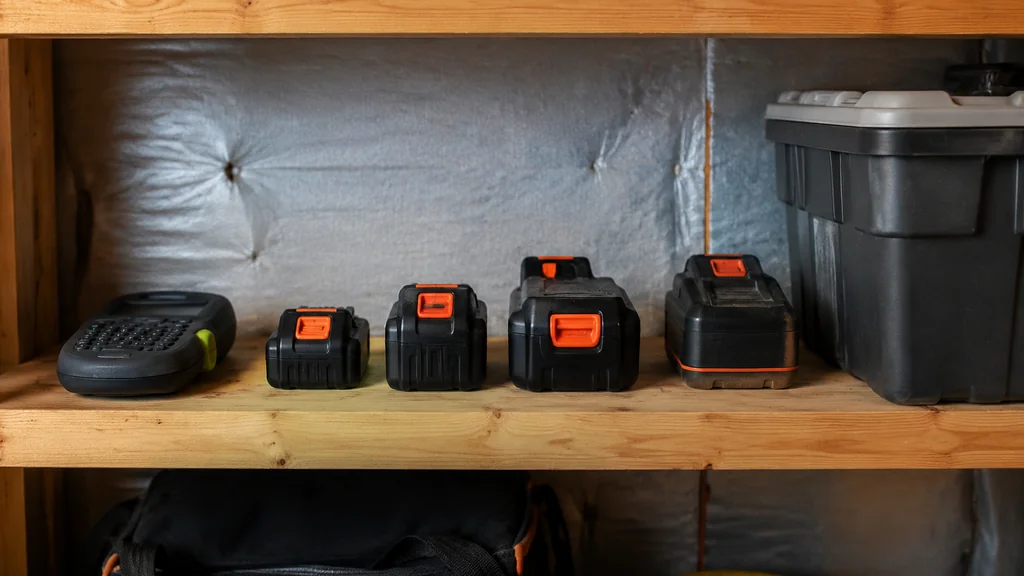
A few shop habits keep packs alive longer. Keep a spare charger so a hot pack can cool while another charges. Label packs by age so you retire the oldest first. Keep a small brush handy to clear dust from the contacts.
Good bits and sharp cutters matter too. A dull bit makes the tool work harder and pulls more current, which heats the pack. The right cutter for the job is the same principle as choosing a Forstner bit over a spade bit when you need a clean, flat hole.
And when you build the rack or shelf these packs live on, joints that stay tight matter. A simple rabbet or dado holds better than a butt joint held by screws alone, which is the argument behind most wood joints in a shop build.
FAQ
How long should a lithium-ion tool battery last?
Most packs give several years of regular use before capacity drops enough to notice. Heat, deep discharge and long storage at full charge all shorten that. A pack treated well and stored cool at half charge will outlast one abused in a hot truck.
Is it bad to leave a battery on the charger overnight?
It is not dangerous with a modern charger, but it is not ideal. The pack sits at full voltage for hours, which ages the cells faster. Pull it off when the light says full and store it at half charge instead.
Can I use a charger from another brand?
No. Use the charger made for that pack. The pack and charger boards are matched, and a mismatched pair can push current the cells were not built for. This is where most battery fires start.
Should I drain a pack completely before charging?
No. These packs have no memory effect, so a partial charge is fine. Deep discharge is what damages them, so top up when the gauge gets low instead of running it flat.
What do I do with a swollen pack?
Stop using it and stop charging it. A swollen pack is a fire risk. Take it to a household hazardous waste site or a retailer that collects batteries, and never open the case yourself.
Thank you for reading!