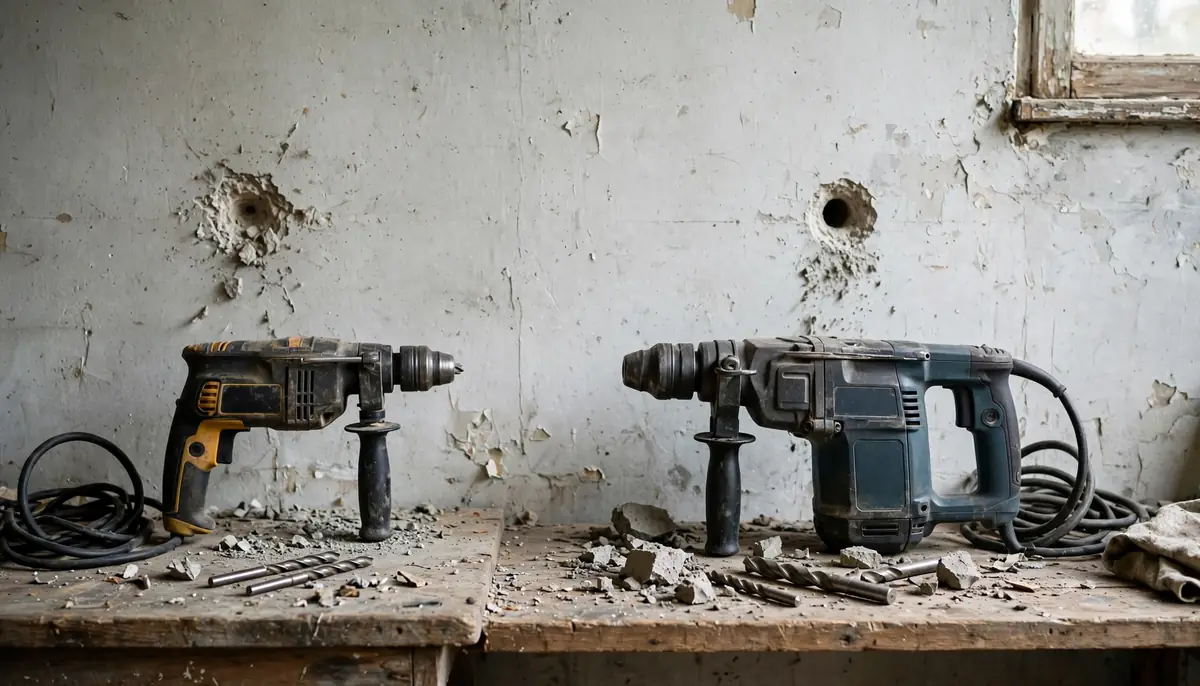
A hammer drill spins the bit and taps it with two ridged clutch plates, so it drills small holes in block, brick, and mortar. A hammer drill suits small holes in brick, block, and mortar joints for plastic plugs and light anchors. A rotary hammer suits anchor holes in poured concrete, deep holes with an SDS-Plus bit and depth stop, and chipping or tile removal in hammer-only mode with a chisel.
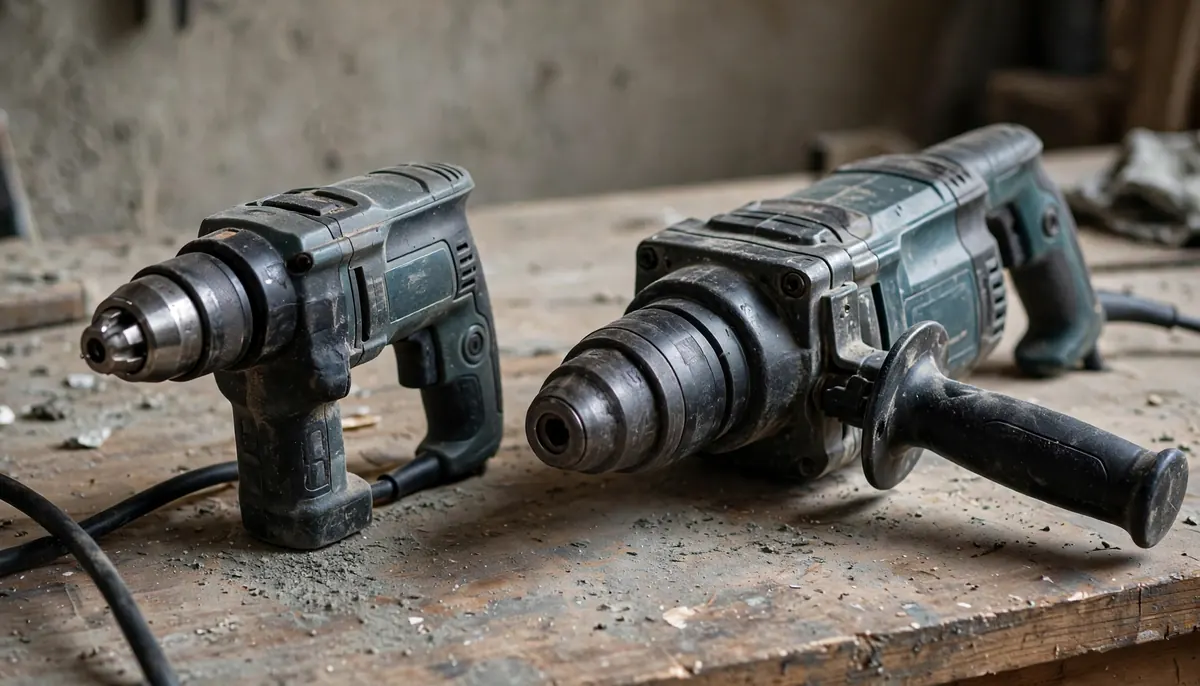
How Each Tool Actually Breaks Concrete
The hammer drill is a drill with a bonus. An electric motor turns the chuck, and behind the chuck sit two toothed plates that ride over each other as they spin.
A rotary hammer delivers an impact action to the bit, separate from the rotation, and many models also include a slip clutch, a feature that varies by model, which is designed to reduce the load on the tool if the bit jams. Whether it suits a given hole depends on the hole size and the location.
Impact-energy ratings are one useful specification to compare, alongside tool capacity and the manufacturer’s recommendations. Compare the impact energy rating for striking performance, and check the manufacturer’s runtime information before you rent.
That difference decides the job. A masonry hammer drill handles small holes in brick, block, and mortar joints for plastic plugs and light anchors.
Match the Tool to the Hole
Decide by diameter, depth, and what the wall is made of. Nothing else matters as much.
For a ledger or a hose bib set into mortar, a hammer drill with a masonry bit works. Ordinary small-to-medium anchor holes in poured concrete call for a rotary hammer. Very large or deep holes may need coring equipment or a professional assessment. Tile removal, a small slab break, or chipping a footing is rotary hammer work in hammer-only mode with a chisel.
The bit shank is the tell. A hammer drill takes round-shank masonry bits in a three-jaw chuck. A rotary hammer takes SDS-Plus bits or SDS-Max bits that slide into a collar and lock with two spring-loaded balls. You cannot swap them, and you should not try to chuck an SDS bit in a jawed chuck.
| Job | Tool | Bit | Typical hole size |
|---|---|---|---|
| Plastic plug in brick or block | Hammer drill | Round-shank masonry bit | Small holes |
| Ledger or hose bib anchor in mortar joint | Hammer drill | Round-shank masonry bit | Small holes |
| Wedge anchor in poured concrete | Rotary hammer | SDS-Plus or SDS-Max | Match the anchor's specified diameter |
| Deep hole | Rotary hammer | SDS-Plus with depth stop | Match the anchor's embedment depth |
| Tile removal or footing chip-out | Rotary hammer, hammer-only mode | Flat chisel | N/A |
Bits, Anchors, and the Numbers That Matter
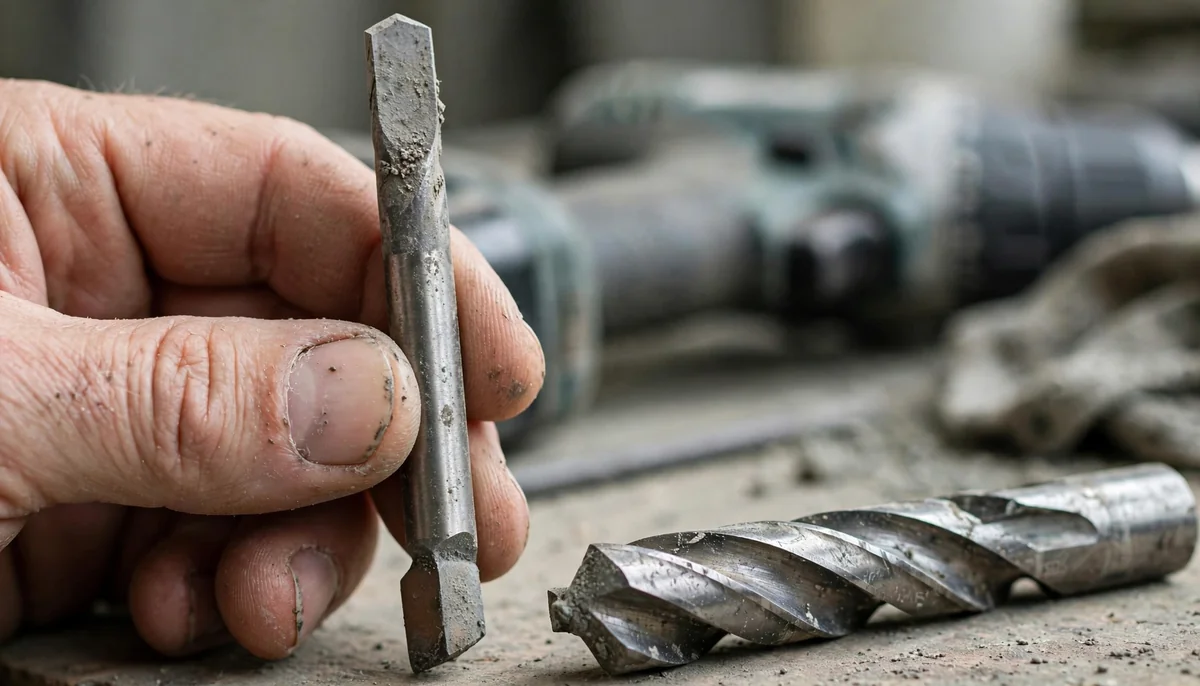
Carbide quality and bit suitability matter, so follow the manufacturer’s specifications. Bits are sold as masonry, and the tip is tungsten carbide.
Match the bit to the anchor’s requirements. Follow the anchor manufacturer’s specified hole diameter, embedment depth, and cleaning requirements. Read the label on the box before you drill, because the required hole size for a given screw is not the same as the screw diameter.
Dust left in the hole keeps the anchor from seating and cuts its holding power.
Bit length matters as much as diameter. A bit has to reach the embedment depth plus the shank’s loss in the chuck or collar, so check the usable length printed on the shank before you buy. Some rotary hammer and bit combinations accept a depth stop that sets the drilling depth; check the tool and bit model. For wedge anchors, follow the manufacturer’s instructions for the required hole depth, including any clearance for dust at the bottom of the hole.
Dust, Silica, and the Safety Rules That Are Not Optional
On a small job, use a dust-control method suited to the task and the exposure, and follow the relevant safety guidance and product instructions for respiratory protection.
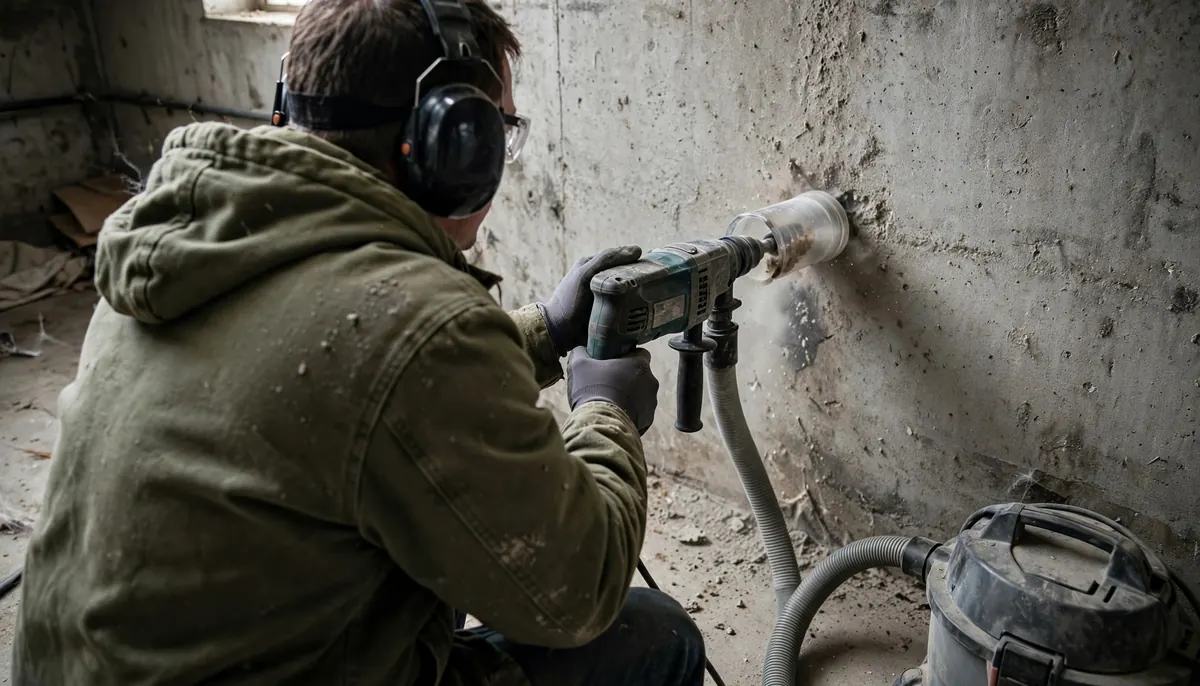
Use a dust shroud and vacuum designed for the tool and the task. Set the vacuum on before the bit touches the wall and keep the shroud flat against the surface, because a tilted shroud leaks dust around its lip. Empty the vacuum outside and wipe the shroud down when you finish. Indoors, in a finished basement, do not skip this step. For more on silica dust control, plan the cleanup before the first hole.
Wear hearing protection when using a rotary hammer, especially in an enclosed space like a stairwell. Safety glasses, or better a face shield over glasses, keep chips out of your eyes when the bit breaks through.
Technique: What Separates a Clean Hole From a Ruined Wall
Mark the hole with a pencil and start with a small pilot bit if the surface is slick. Press the bit against the mark and, where the tool and bit allow and the manufacturer’s starting instructions permit, squeeze the trigger with the tool off hammer for the first few seconds, so the tip bites instead of skating across the face.
Once the tip is in, switch to hammer mode and let the tool do the work. Steady, moderate pressure and a straight wrist is the whole technique.
Drill perpendicular to the surface. A hole drilled at an angle can affect how the anchor fits and performs, so follow the anchor manufacturer’s instructions on hole angle and diameter. If you hit rebar, stop. Assess the location, and consult a qualified professional before drilling near structural reinforcement. Never force a masonry bit through rebar.
If a bit does jam, release the trigger, unplug the tool, and work the bit free by hand.
Test the hole before the anchor goes in. Follow the anchor manufacturer’s cleaning, depth, and setting instructions, and check the hole depth against the anchor before setting it. If the hole is shallow, drill it again, because hammering the anchor in will shear the threads.
Common Mistakes That Ruin Bits and Holes
The most common mistake is pushing the tool. Use steady pressure and follow the tool instructions. If the hole stops progressing, pull the bit out, clear the flutes, and inspect the tip. Visible wear or a loss of cutting performance means it is time to replace the bit.
The second mistake is running the bit in hammer mode before it has bitten into the surface. The tip skates, scratches tile or finished concrete, and can crack a glazed face. Start in drill mode, get a dimple, then switch.
The third is ignoring the rebar.
Whether to rent depends on the project and local costs. Rental terms and included bits vary by provider, so check what the yard offers and match the bit to the anchor manufacturer’s requirements before you commit. Weigh the rental against the purchase price and the number of holes.
Inspect a rental before you leave the yard. Pull the trigger in drill mode and in hammer mode, check that the collar locks a bit with a firm click, and look at the chuck seals for cracked rubber, and flag any cracked rubber to the rental yard.
Battery runtime and hole count vary by tool, battery, material, and drilling conditions, so check the manufacturer’s specifications.
Call a professional when the job involves coring a large hole through a foundation wall, cutting into a post-tensioned slab, or drilling near structural rebar in a load-bearing element. These tasks may require specialized equipment and assessment by a qualified professional who knows what is inside the wall before the bit goes in.
Concrete Hammer Drill and Rotary Hammer FAQ
Can a regular hammer drill drill into concrete?
It can make small holes in concrete, slowly, with a sharp carbide bit.
What size rotary hammer do I need for anchors?
The right size depends on the anchor. Match both the tool and the bit to the anchor manufacturer’s stated hole diameter and embedment depth, and check the tool’s specifications before you rent or buy.
Do I need a special bit for a rotary hammer?
Yes. Rotary hammers take SDS-Plus or SDS-Max shank bits, which lock into the collar and slide under impact. A round-shank masonry bit for a jawed chuck will not fit, and an SDS bit will not fit a standard chuck. Buy the bit for the tool you have.
Is a hammer drill or rotary hammer better for brick?
For small, non-structural holes in brick and block, a hammer drill with a sharp masonry bit is often enough, and tool choice depends on the material and the task. A rotary hammer works too; use light pressure and let the bit cut, and follow the manufacturer’s guidance for the material.
Can I use a rotary hammer to remove tile or break up a slab?
A rotary hammer in hammer-only mode with a flat chisel can lift tile and handle light, non-structural chipping work. It is not a demolition hammer, so expect to work at it. For footing or slab removal, consult a concrete contractor or a qualified professional.
Thank you for reading!