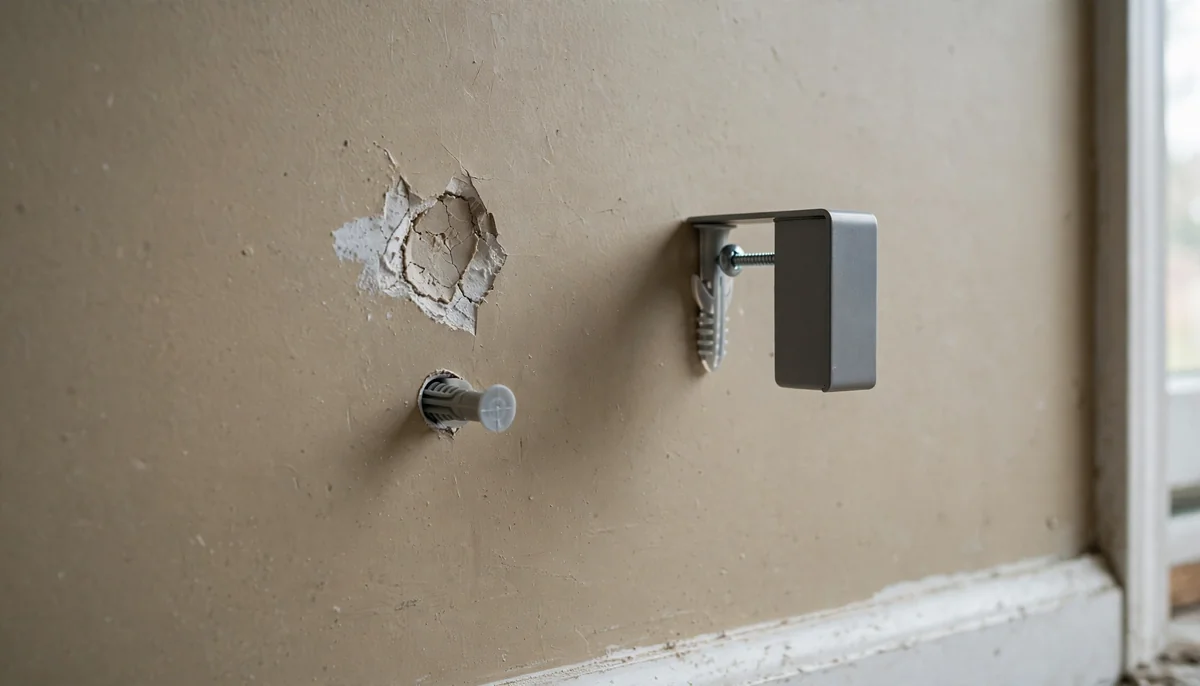
Screwing into drywall works when the load is light and the fastener is matched to it. A bare screw holds almost nothing in gypsum board; a proper anchor spreads the load across a wider area of the board or reaches the framing behind it. Pick the wrong anchor or drive it too deep and the fixture will pull out, usually with a chunk of the wall attached.
Start With the Load, Not the Screw
The first question is not which anchor to buy. It is what the fixture weighs and whether it will be pulled away from the wall or straight down.
A picture hook rated for a few pounds is fine in bare drywall. A shelf holding books, a mirror, a wall-mounted TV, or a grab bar in a bathroom is a different job. Anything a person might grab or lean on belongs in framing or in a heavy-duty anchor designed for that load.
Two things decide the answer:
- Weight. Light loads under about 10 pounds can hang on a small self-drilling anchor. Heavier loads need a toggle or a stud.
- Direction of pull. A load pulling straight down is easier on the wall than a load pulling outward, like a cabinet door or a towel bar.
If you are unsure, go heavier. Overbuilding a wall anchor costs a few dollars. Repairing a torn-out wall costs an afternoon and a patch of joint compound.
Know Your Anchors Before You Drill
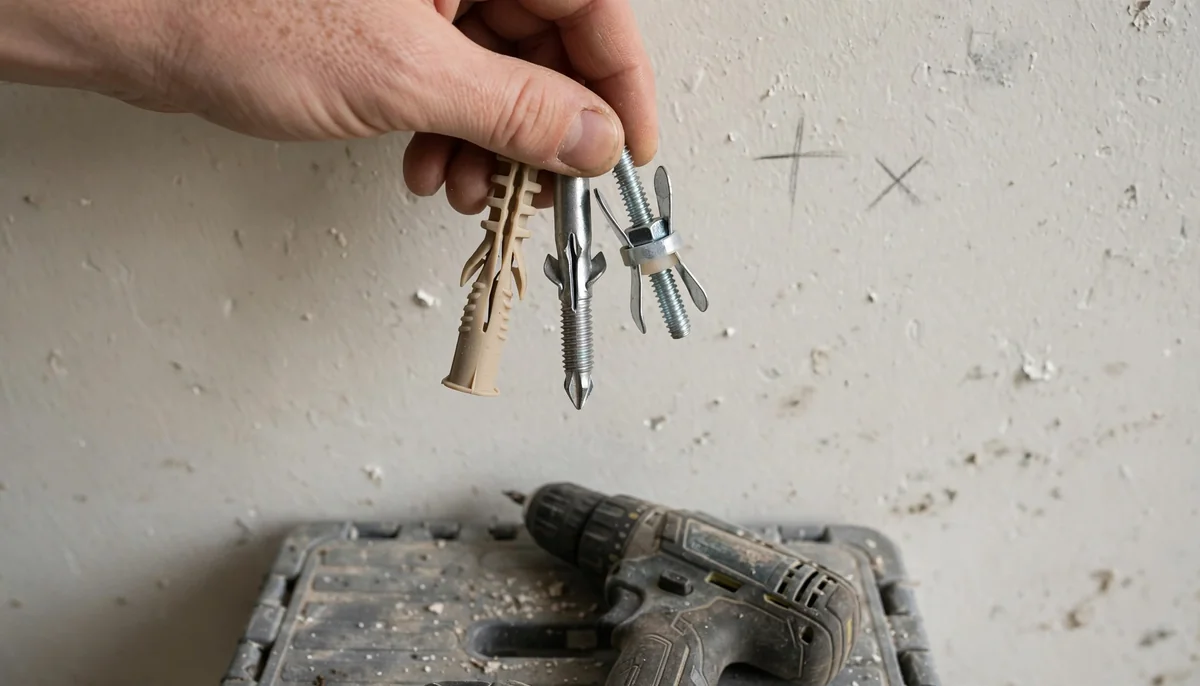
Drywall anchors fall into a few families, and each one has a place.
Self-drilling anchors (often called E-Z Ancor or similar trade names) cut their own hole with a Phillips driver. They hold light loads in 1/2-inch board and are the fastest option for a small hook or a smoke detector base. They are not for anything you will pull on.
Expanding plastic anchors need a pilot hole and swell as the screw goes in. They work in light concrete and in drywall for light-to-medium loads, but they crush the gypsum around them if you overtighten.
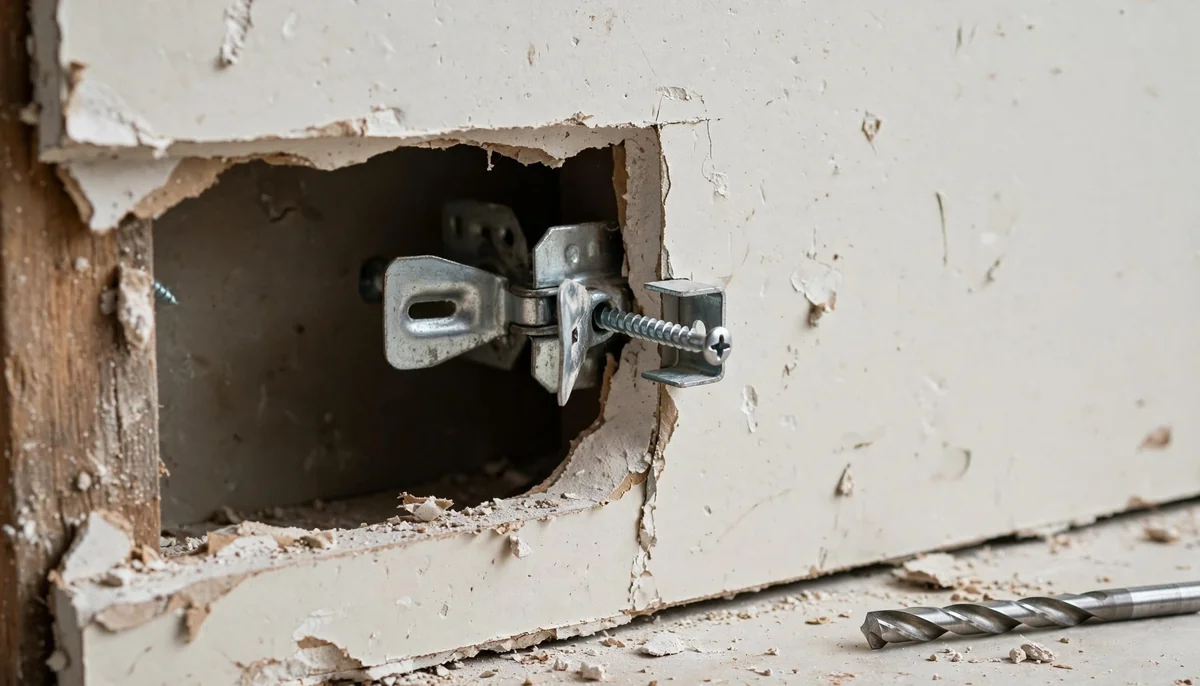
Toggle bolts are the workhorse for hollow walls. A spring toggle or a snap toggle opens behind the board and spreads the load across a wide area. A 1/4-inch snap toggle may be rated for more than a plastic anchor, but use studs or suitable backing for a TV mount or heavy shelf bracket.
Molly bolts (hollow-wall anchors) expand a metal sleeve behind the board. They hold well in medium loads and can be removed and reinstalled, which matters for a fixture you might move.
For anything structural, find the stud. A stud finder, a magnet to locate drywall screws, or a thin finish nail tapped through the paint will tell you where the framing is. Standard framing is 16 inches on center, though older homes and some walls run 24 inches.
Depth: The Part Most People Get Wrong
Depth is where good anchors fail.
The screw must pass through the fixture, through the drywall, and fully engage the anchor. It must not bottom out inside the anchor and strip it, and it must not stop short and leave the fixture loose.
A few rules that hold up:
- Use the screw that came with the anchor. Anchor makers size the screw to the anchor. A longer screw can punch through a toggle and lose the load.
- Drive until snug, then stop. When the anchor seats against the back of the board, the screw gets suddenly harder to turn. That is your stop signal.
- Do not countersink into drywall. Gypsum has no grain and no strength in compression. Overdrive a screw and you crush the paper face and the core, and the anchor loses its grip.
- Watch the drill clutch. Set a cordless drill to a low clutch setting so it stalls instead of stripping. On a driver with a hexagonal bit holder, a 1/4-inch hex shank bit makes swapping between a pilot bit and a driver fast.
For a toggle bolt, the depth is set by the anchor, not by feel. The toggle needs enough room behind the wall to flip open. In a shallow cavity, like a wall backed by a cabinet or a furred-out basement wall, a snap toggle with a plastic strap is easier to set than a spring toggle that can drop down inside the cavity.
Tools That Make This Easier
You do not need much, but the right small tools save wall repairs.
- Cordless drill or impact driver with an adjustable clutch. An impact driver drives fast but hammers, which is the wrong motion for brittle gypsum.
- 1/4-inch hex shank bits and a bit holder. The hexagonal shank is the standard for quick-change holders, and it lets you switch from a 3/16-inch pilot bit to a Phillips driver without rechucking.
- Stud finder and a magnetic screw locator. The magnet finds the screws already in the wall, which is the most reliable stud map you will get.
- Awl or a small nail. Poke through the paint to confirm you are in wood before you commit to a hole.
- Pencil and painter’s tape. Tape marks the drill depth so you do not punch through the back of the board into a wire or pipe.
One safety note that is not optional. Before drilling anywhere near an outlet, switch, or a wall with plumbing, know what is behind it. The National Electrical Code requires that cables passing through framing be set back from the face of the stud or protected by a steel plate, but that protection only covers the stud itself. A drill bit can still find a cable in the open cavity. If you are drilling into a wall you do not know, shut off the circuit and use a cable detector.
Mistakes That Cost You the Wall
Most drywall failures come from a short list of errors.
Hanging weight on a bare screw. A screw in gypsum holds a few pounds at best. It will hold a picture frame for a while and then let go.
Using the wrong anchor for the cavity. A toggle needs room to open. A plastic anchor needs solid board, not a crumbled patch from an old repair.
Overtightening. This is the most common one. The screw feels tight, you give it one more turn, and the paper face tears. Back it off and the anchor is loose forever.
Reusing a hole. Once an anchor has pulled out, the hole is enlarged and the board is damaged. Move over a few inches or patch the hole and start fresh.
Skipping the pilot hole. Self-drilling anchors do not need one, but expanding anchors and toggles do. A pilot hole the size the manufacturer lists keeps the board from cracking.
Drilling blind. A bit that runs long enough will find a wire, a pipe, or the back of an exterior wall. Tape the bit to the depth you need.
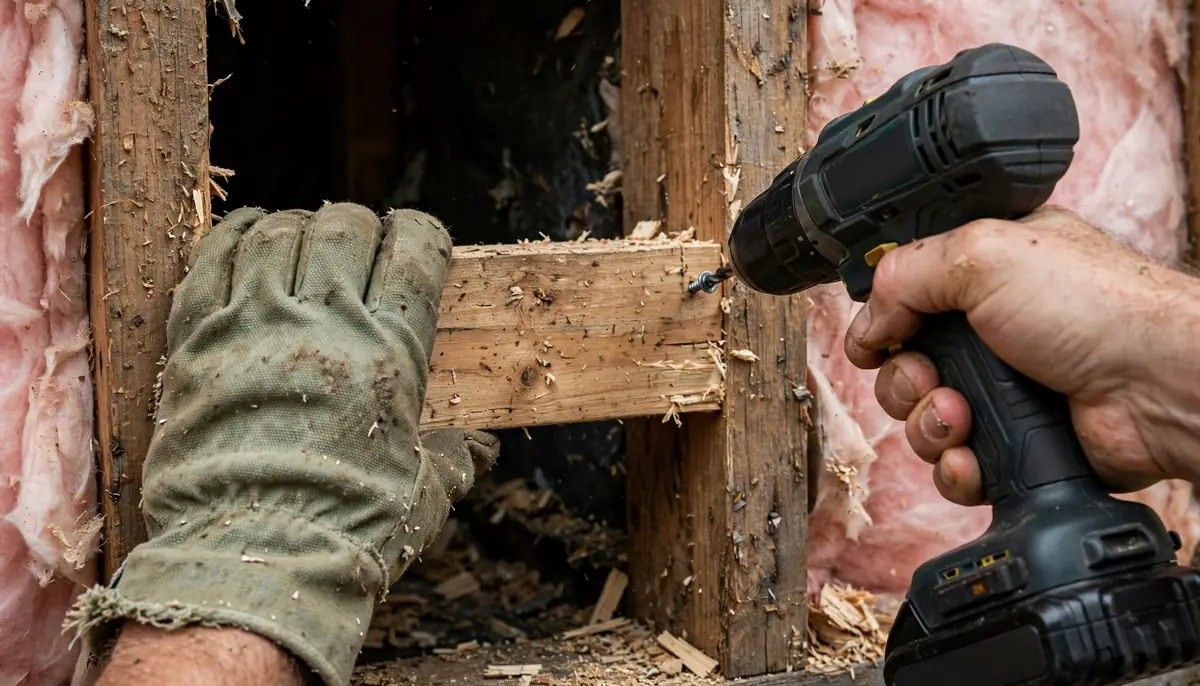
If a fixture is heavy, in a wet area, or something a person will grab, open the wall and add blocking. A 2×4 or plywood backer screwed between studs gives you a solid target for fastening. That is more work, and it is the only fix that holds up to real use.
When to Call a Pro
Hanging a picture is a homeowner job. A few things are not.
Call a licensed electrician if the mounting point is near a panel, a switch bank, or any wiring you cannot identify with certainty. Call a plumber before drilling into a wall shared with a bathroom or a kitchen, where supply and drain lines run. And call a contractor for anything that carries a structural load, like a TV mount on a wall you are not sure is framed for it, or a grab bar that has to hold a person’s weight.
The line here is simple. If the failure mode is a cracked wall, do it yourself. If the failure mode is a shock, a flood, or an injury, get a professional.
Related guides
- Forstner Bits: When They Beat a Spade Bit
- Types of Wood Joints Every Woodworker Should Know
- How To Start An Interior Design Business: Your Comprehensive Guide
Screwing Into Drywall FAQ
How much weight can a drywall anchor hold?
It depends entirely on the anchor. Small self-drilling anchors are rated for a few pounds, plastic expanding anchors for light-to-medium loads, and quality toggle bolts for far more than most wall fixtures need. Check the rating printed on the anchor package and stay under it, because the rating assumes good board and a correct install.
Do I need a pilot hole for a drywall anchor?
Self-drilling anchors cut their own hole, so no. Expanding plastic anchors, Molly bolts, and toggle bolts all need a pilot hole at the size the manufacturer specifies. Using the wrong size, too small or too large, is a common reason anchors spin or fail to grip.
What size screw should I use in a drywall anchor?
Use the screw that comes with the anchor. The maker matched the screw length and diameter to the anchor’s holding power. If you lose it, match the original with a caliper or take the anchor to the hardware store and test-fit a replacement.
Can I screw directly into drywall without an anchor?
You can, and it will hold a very light picture for a while. Gypsum board has almost no pull-out strength, so a bare screw in drywall is a temporary fix at best. For anything you care about, use an anchor or find a stud.
Why did my drywall anchor pull out?
The usual causes are overtightening, which crushes the gypsum around the anchor, using a light-duty anchor for a heavy load, or installing into a hole that was already enlarged from a previous anchor. Move the mounting point a few inches and use a heavier anchor or add blocking.
Thank you for reading!