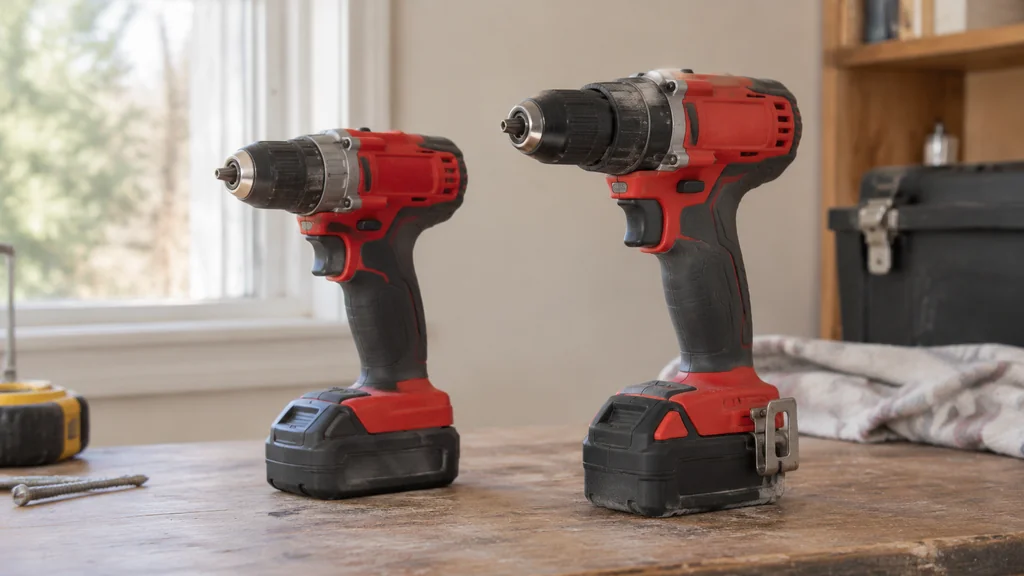
The short answer is that M12 and M18 are two different battery platforms, and the drill you pick should follow the work you actually do. Buy the platform that matches your heaviest regular job, because batteries and chargers are the real cost over the years.
The platform decision is the expensive one and the bare tool is the cheap part, because packs and chargers are tied to the family you pick.
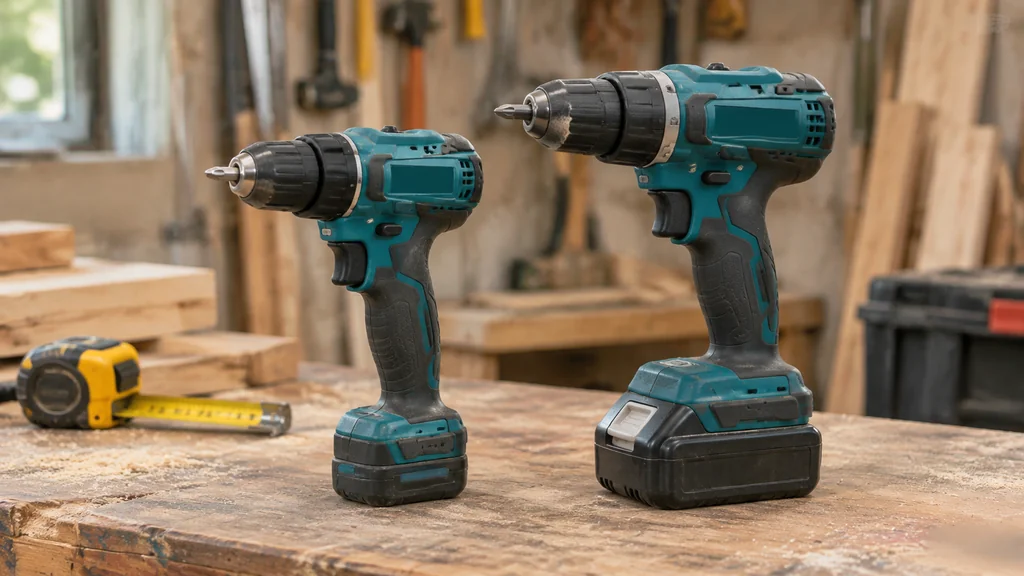
What M12 and M18 actually mean
M12 and M18 are the names of the two battery families in the range. Wear eye protection and secure the workpiece, whatever the platform. MDF and plywood are common sheet goods for jigs, cabinets and shop furniture.
The compact platform suits cabinet work, driving screws overhead and tight spots. Sheet goods such as MDF and Plywood place little load on either platform, which is why cabinet work suits the smaller family. A Hammer Drill or an Auger Bit job is where the larger family earns its keep. Neither is better in the abstract. A compact drill that fits between studs and cabinets will get used far more often in a finished house than a heavy drill that only comes out for structural work.
Modern cordless drills commonly use a pistol-grip layout with a battery in place of a cord.
When you compare the two platforms, ignore the marketing names for a moment and look at four things. Voltage and motor size, chuck and bit capacity, physical size and weight, and the price of the batteries. The rest is detail.
How the two platforms differ in real use
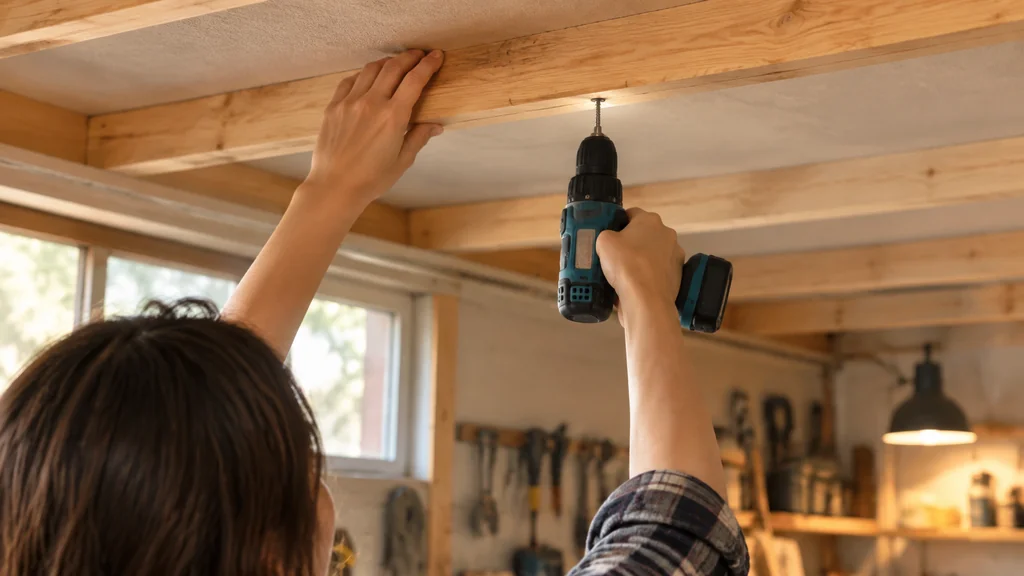
For assembly, trim, outlets, hinges and light framing, a compact drill does the job and does it comfortably.
Check the capacity per material on the spec sheet for each model. The bigger platform does not automatically double every capacity. A sheet of MDF barely loads either family, while repeated auger bits through hardwood show the gap between them quickly.
A compact drill is not a hammer drill unless the label says so. A drill’s hammer capability depends on the tool’s stated specifications. Hex-shank accessories and hammer drills are separate considerations when comparing tools. Auger bits and hole saws also place different demands on the drill.
Choosing between them: a step-by-step method
Work through these steps and match the platform to your regular jobs.
- List the five jobs you did most in the last year. Be honest about the heaviest one, not the average.
- Decide whether any of those jobs needs a hammer mode, a large hole saw or an auger bit.
- Handle both sizes in the store if you can. Weight and grip matter more than any spec line, and a drill you dislike holding stays in the case.
- Count the batteries you will need across all your tools, not just the drill. Consider how many packs and chargers you will need, and the platform you choose now sets that cost.
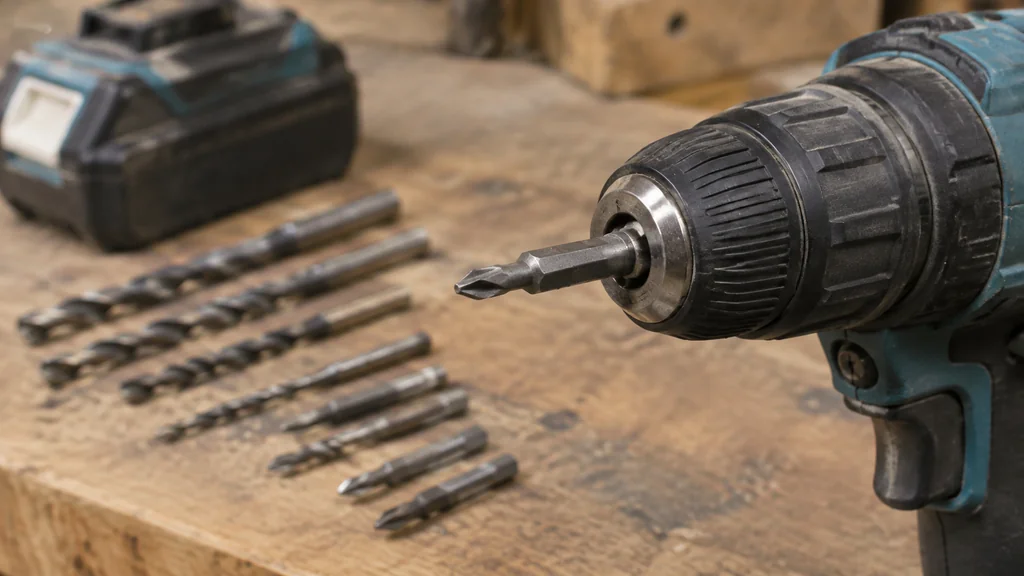
- Check the chuck size and bit range against the bits you already own, and confirm the capacity per material on the spec sheet.
- Buy the bare tool if you already own packs in that platform, and buy a kit if you are starting fresh.
- Keep one spare battery charged and stored indoors, because cold packs lose output fast in an unheated garage. Keep the workpiece secure and avoid loose clothing near moving parts. Masonry and hardwood can also increase the load on the tool.
If you are building out a workshop at the same time, the same logic applies to sheet goods. Our guide to MDF, plywood and fiberboard covers which panel to pick for jigs, cabinets and shop furniture, and it is worth reading before you cut the parts your new drill will assemble.
Costs and what you are really paying for
The drill body is rarely the expensive part over ten years. Batteries, chargers and replacement packs are, and they are tied to the platform.
Check the label and the current lineup before you commit, since ranges do change, but the direction of travel favors staying within one platform.
Practically, that means comparing kits on what is in the box. A kit with two batteries and a fast charger can cost more than a bare tool plus a separate pack, and sometimes the kit is the better deal. If your heaviest regular job is a big Hole Saw cut in joists rather than MDF shelf assembly, price the full-size kit against that job. Do the arithmetic on the total you will spend to get two working batteries, then compare. Do not buy a second platform just to save a little on one drill, because you will pay it back on every battery after that.
Mistakes that cost money and time
The most common mistake is buying the biggest drill first. A heavy full-size drill that lives in its case because it is tiring to use is worse value than a compact one you reach for daily. Match the tool to the work, and add a bigger drill later if a real job demands it.
The second mistake is mixing platforms by accident. Read the label on the battery before you buy anything for a family you already own. Tool colour can vary, so keep the families straight if you own both.
The third is ignoring the chuck and bit interface. A Keyless Chuck handles most work, but if you run small precision bits or a lot of hex-shank accessories, check what the tool accepts before you buy. The same discipline applies to fasteners. If a screw head rounds off mid-job, our method for removing a stripped or rounded screw without damaging the surrounding material will save the workpiece, and a good bit fit is what prevents the problem in the first place.
The fourth is safety. A cordless drill is still a drill, and a large hole saw in a full-size tool can bind and kick hard. Use the side handle when the tool has one, clamp small work, and never wear loose sleeves near a spinning chuck. If a job needs a hammer drill for masonry and you only have a drill-driver, use a hammer drill for that work.
When to step up to a pro-grade tool or a different platform
Step up to the full-size platform when your work is structural, repetitive or heavy. If you find yourself waiting for a compact drill to cool down, that is your signal.
Stay compact if your work is finish carpentry, cabinets, electrical rough-in, furniture and general household repair. The lighter tool gets used more, reaches further and is safer to control one-handed in awkward spots.
Consider a corded drill for the rare heavy job. A corded hammer drill gives you sustained power without battery cost. Keep one corded drill for masonry and big holes, and let the cordless tools handle everything else. The same basic precautions, like avoiding loose clothing near moving parts, apply to corded tools as to cordless ones.
If you are building furniture or doing joinery with the drill, the quality of the joint matters more than the tool. Our explanation of what a dovetail joint is and where it belongs will help you decide when a drill and screws are the wrong answer and a proper joint is the right one.
Milwaukee Drills FAQ
Do M12 batteries fit M18 tools?
Keep one charger per family and label your packs so they do not get mixed up.
Is M18 too heavy for home use?
It can be, for overhead and assembly work. A full-size drill with a large pack is noticeably heavier than a compact one, and that weight shows up when you hold it above your head or work in a cabinet. For occasional household jobs such as driving screws into plywood or assembling MDF cabinets, the compact platform is usually the more comfortable choice.
Which platform is better for drilling masonry?
A drill without hammer action will struggle in brick and block no matter which battery is on it. Check whether the specific tool has a hammer mode before you take it to masonry. Check the label and the spec sheet, and use a corded Hammer Drill for heavy masonry work.
Can I use the same charger for both platforms?
If you own both platforms, keep both chargers, or buy a combo charger only if the manufacturer lists it for both families. Check the label on the charger before you rely on it.
How do I compare two Milwaukee drills before buying?
Compare capacity per material, chuck size, weight with the battery fitted, and the price of a two-battery setup. Include the batteries when judging the total cost. Handle both if you can, then check the spec sheet for the exact figures. The platform decision outlasts the drill, so weigh it heaviest.
Thank you for reading!