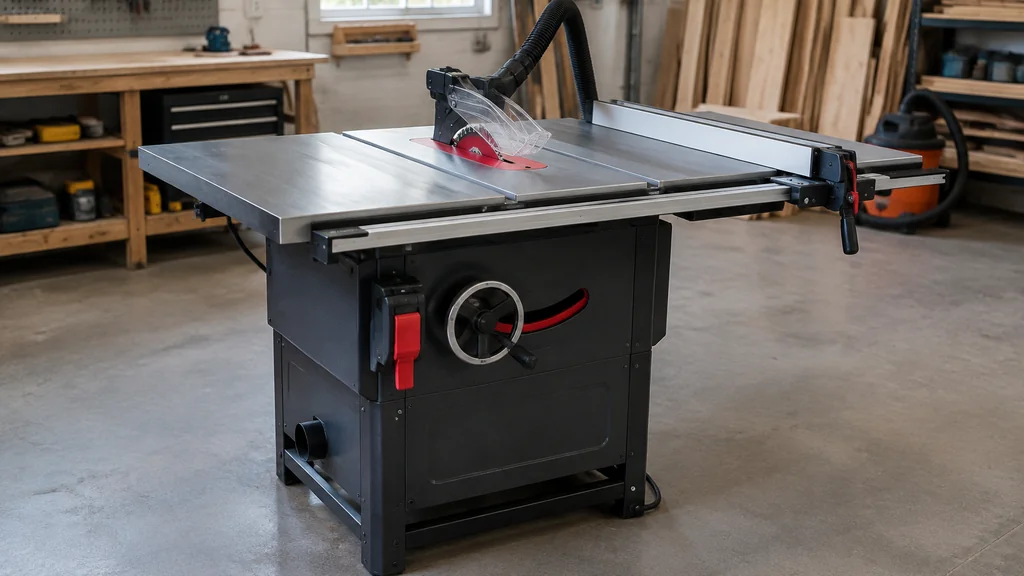
A SawStop table saw watches for electrical contact between the blade and your skin. When contact is detected, the brake engages and the blade drops below the table.
What the brake cartridge actually is
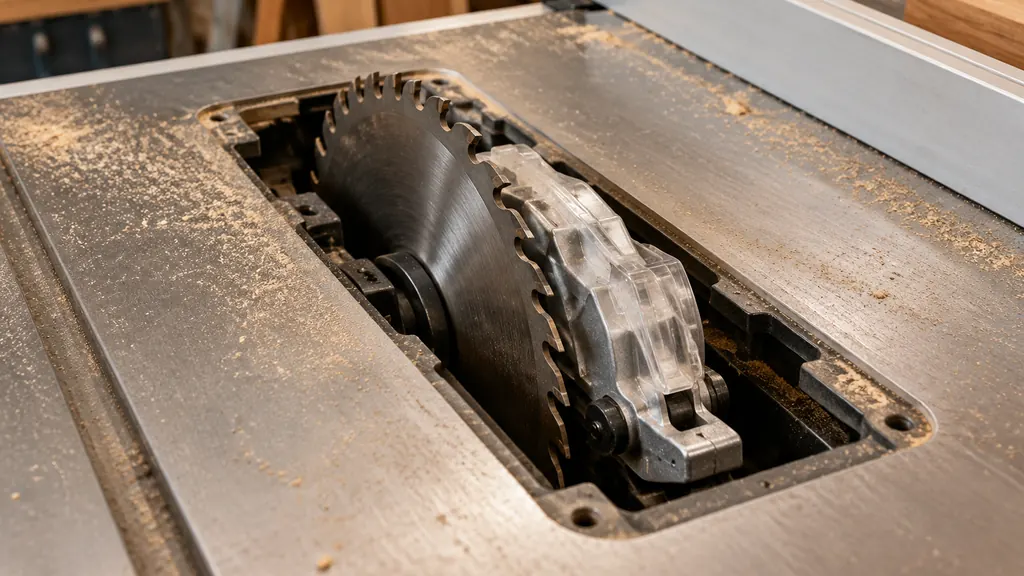
Pull the throat plate on any SawStop table saw and you will find a cartridge clipped in under the table, sitting a hair’s breadth from the blade. The cartridge contains the components that activate the brake. It is a one-shot device. Once it fires, the cartridge is spent and you buy a new one.
Cartridge compatibility depends on the saw. Check the manual for your machine before you order a spare.
Check the manual for guidance on the brake system. The brake has to be replaced along with the blade in most firings.
How the brake fires in milliseconds
The system detects contact with the blade and reacts quickly. Contact with conductive materials can also trigger the brake.
When the blade contacts skin or another conductive path, the detection circuit registers the change in signal. The brake engages, stopping the blade and driving it below the table. The motor cuts out.
The event takes milliseconds. The blade still cuts on the way in, but the system can reduce the injury.
What a fired brake costs you
When the brake fires, you replace the cartridge and usually the blade. A decent general-purpose blade adds to the cost. Carbide-tipped blades are also used on table saws. If you were running a good rip blade, that is a bad afternoon.
A fired brake often bends or chips the teeth, so the blade usually needs replacing.
Running costs depend on how often the system fires. Wet pressure-treated lumber can trigger the brake, which is why the bypass key exists.
Bypass mode and when to use it
Bypass mode disables the brake so you can cut material the system would otherwise read as a hand. Green or wet lumber, foil-faced insulation board, and anything with a conductive coating will trip the brake if you do not bypass it. So will a metal tape measure laid across the table, and so will a staple you missed.
Test uncertain material against the saw’s indicator before cutting. Never bypass the brake to work around a safety habit or avoid using the guard.
A misaligned riving knife or fence can contribute to kickback, which the brake cannot prevent.
What the saw itself costs
A SawStop table saw costs more than a comparable saw without the system.
Models range from compact jobsite saws to contractor and cabinet saws with cast iron tops. Check current pricing with a dealer.
Budget for the running costs:
- One spare brake cartridge, matched to your blade size
- A spare blade you are willing to lose
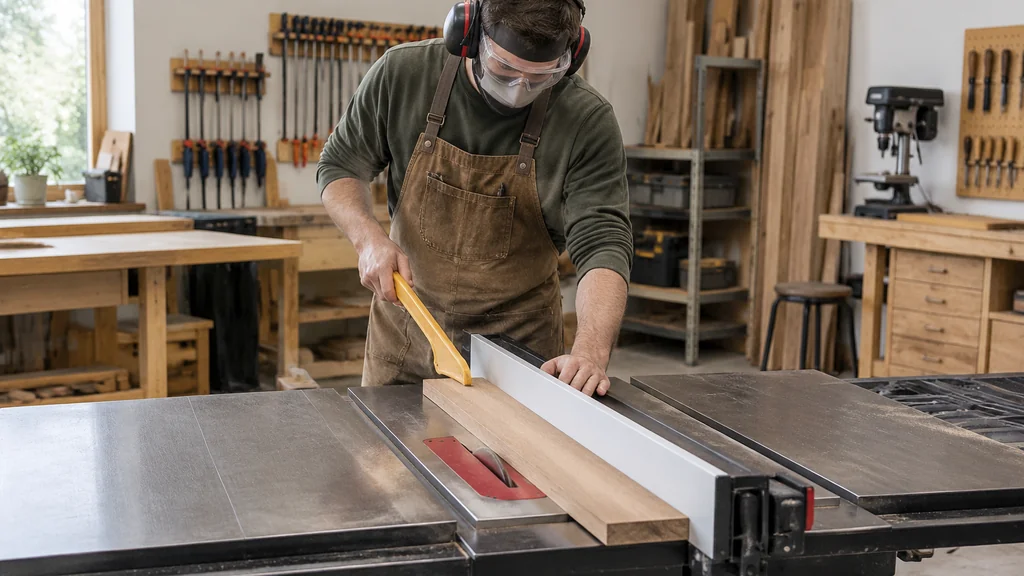
- A decent push stick and a pair of push blocks
- Hearing protection and safety glasses you will actually wear
For regular use, account for cartridges alongside blades and sandpaper.
Where the brake will not save you
The brake fires only when the blade touches you. It cannot prevent kickback from a board pinched between the blade and fence, or lifted off the table. Keep hands clear of the blade path and use push sticks.
The same logic applies to lithium-ion tool batteries, where charging and storage habits affect the pack’s lifespan.
Maintaining the system
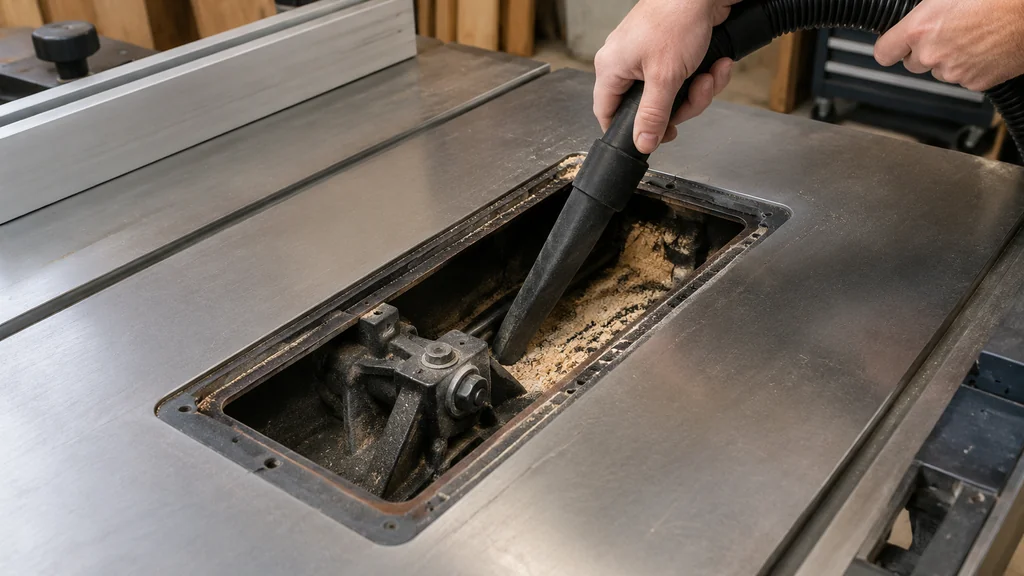
Clean sawdust from the cartridge area, especially when cutting MDF.
Check the cartridge-to-blade spacing whenever you change blades, following the manual’s instructions.
SawStop FAQ
Does the brake ruin the blade every time?
Usually. The aluminum block jams into the teeth, which can bend or chip them. Budget for a replacement blade with the cartridge.
Can I reuse a fired cartridge?
No. It is a single-use device. Replace it with one matched to your blade size.
Why does the brake fire when I cut wet wood?
Wet lumber, pressure-treated stock, and foil-faced material can trigger the detection circuit. Test the material and use bypass mode when needed. Never bypass to skip a guard or push stick.
Will the brake fire if I touch the blade with a metal tape measure?
It can. Anything conductive that bridges the blade and a path to ground may trip the system. Keep tapes, squares, and wrenches off the table while the blade is spinning, and use a wooden push stick to move stock.
Is a SawStop worth the extra money?
The premium pays for a brake designed to reduce injuries from blade contact. The system does not replace safe work habits.
Can I fit the brake to a saw I already own?
No. The system is built into the saw from the arbor up, with the detection circuit, the cartridge mount, and the drop mechanism all designed together. You buy the saw with the brake, or you do not have the brake. No kit turns another brand into one.
A Forstner bit set and careful anchor selection for drywall both reward patience. Measure, set up, then cut.
Thank you for reading!