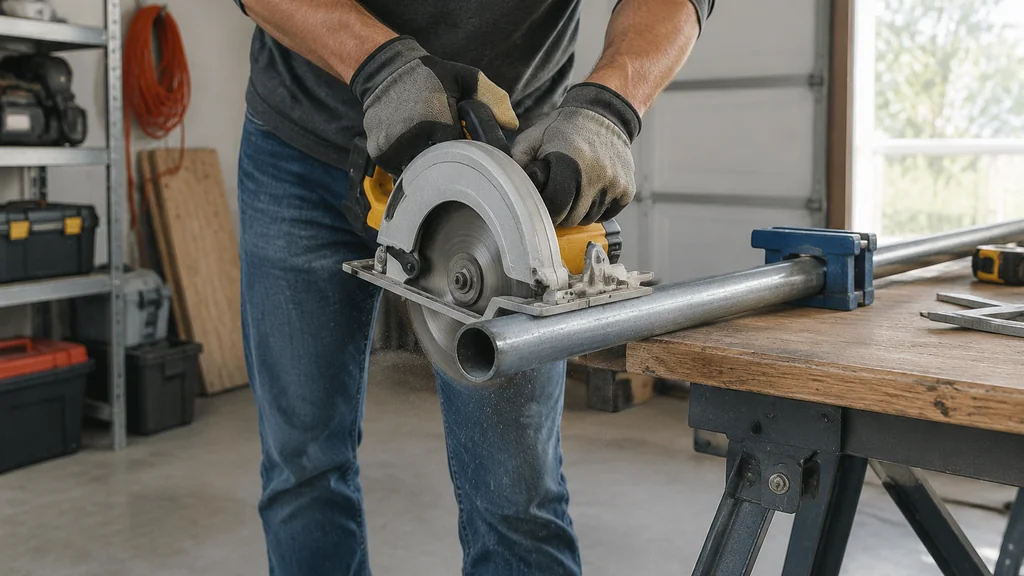
A circular saw will cut metal if you fit a blade made for it, clamp the workpiece so it cannot move, and run the saw slower than you would in lumber. A standard wood blade is not safe for steel or aluminum. Use an abrasive or carbide-tipped metal cutting blade rated for the material and the saw’s RPM, wear eye and hearing protection, and check the blade label before the first cut.
Pick the right metal cutting blade for a circular saw
The blade is the whole job. A wood blade has deep gullets and hardened teeth designed to clear soft fibers. Feed it steel and the teeth dull, heat builds, and the blade can grab or shatter. That is how people get hurt in a garage in Ohio on a Saturday afternoon.
Two blade families do the work:
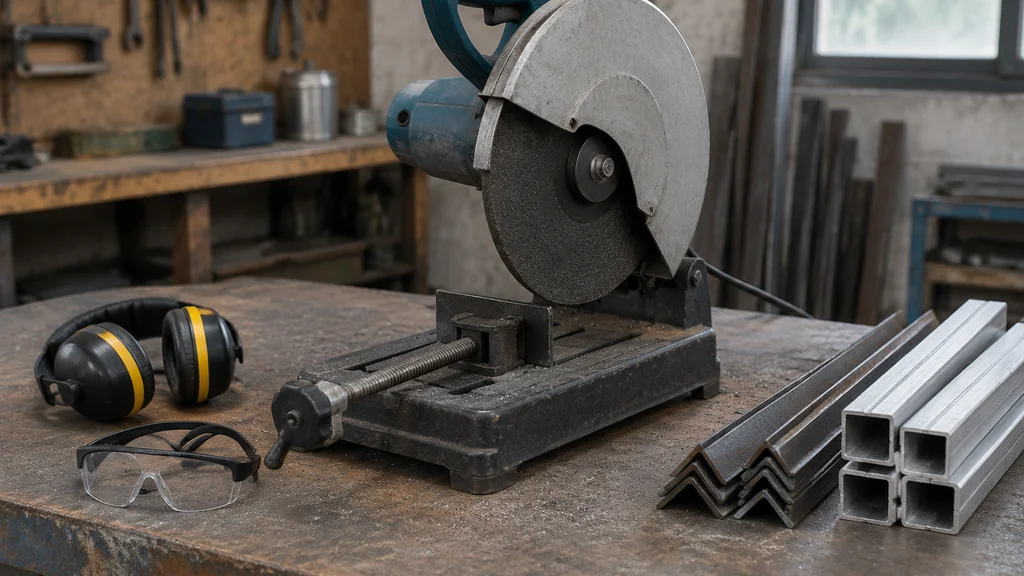
- Abrasive cutoff wheels are thin, cheap, and cut ferrous metal like angle iron and rebar. They wear down fast and throw sparks. Check the wheel’s maximum RPM against your saw’s no-load speed on the label.
- Carbide-tipped metal cutting blades have teeth ground for steel or aluminum and cut cooler and cleaner. They cost more but leave a squarer edge and last far longer on plate and tubing.
Match the blade to the material. Aluminum clogs a fine-tooth ferrous blade, so use one with a tooth geometry meant for non-ferrous metal. Stainless work-hardens if you linger, so keep the saw moving and do not dwell in one spot. For wood and sheet goods the tooth logic is different, and you can read more in our guide to circular saw blades and tooth count.
Set up the saw and the workpiece before you cut
Most metal cutting accidents come from a moving workpiece. A piece of tube that shifts mid-cut binds the blade and kicks the saw back at you.
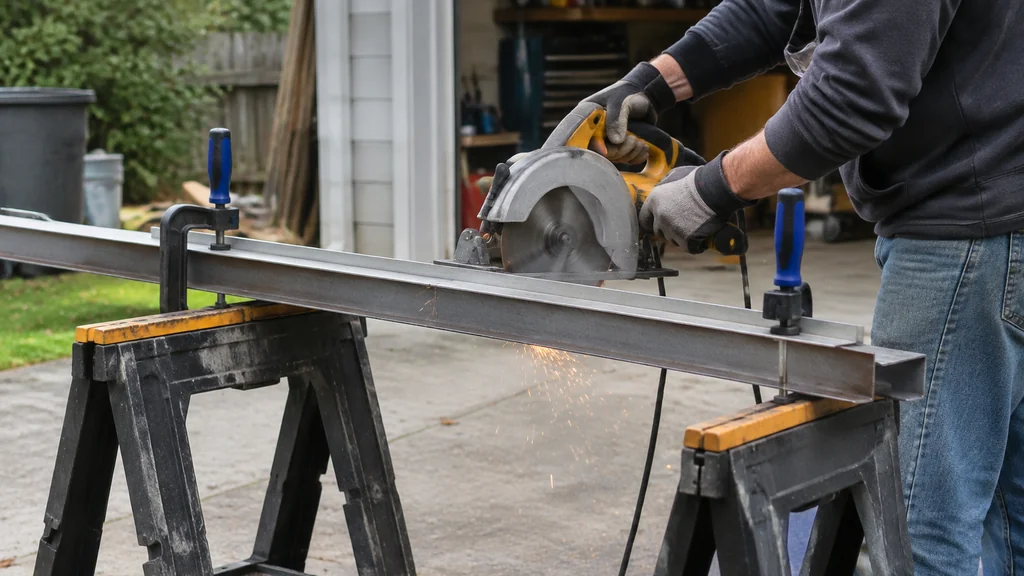
Clamp the work to a solid surface. Do not hold it with one hand and run the saw with the other. Support both sides of the cut so the offcut does not drop and pinch the blade as you break through. If you are cutting a long length of angle iron, set it on sawhorses and clamp it down at two points.
Check the saw itself:
- Confirm the blade’s RPM rating meets or exceeds the saw’s no-load speed on the label.
- Fit the blade with the rotation arrow matching the saw, and tighten the arbor nut with the correct wrench.
- Set the base plate so the blade depth clears the work by a small margin, no more.
- Put on safety glasses, hearing protection, and a face shield for abrasive wheels.
- Clear sparks away from anything flammable, including sawdust in the shop.
Sparks from an abrasive wheel travel far. Sweep the area and move rags, paper, and solvent cans before you start. A fire extinguisher within reach is cheap insurance.
Cut the metal in a controlled pass
Mark your line with a scribe or a marker and follow it with the base plate against a straightedge clamped to the work. A clamped guide rail keeps the cut straight and stops the saw from wandering into the offcut.
Start the saw away from the work, let it reach full speed, then bring the blade to the metal. Let the blade do the cutting. Pushing hard loads the motor, heats the blade, and on stainless steel it work-hardens the edge so the next pass is harder still.
For thin sheet, sandwich it between two pieces of plywood and cut through the stack. The wood supports the metal and stops it from tearing or whipping. Secure tubing so it cannot move, and use a tool designed for cutting round stock.
Keep your body out of the blade’s path. Stand to one side so a kickback sends the saw away from your body. When the cut is done, release the trigger and let the blade stop completely before you lift the saw.
Know the limits of a circular saw on metal
A circular saw is a rough-cutting tool for metal. It will handle angle iron, flat bar, tube, and sheet, and it does those jobs well when set up right. It is not a substitute for a band saw or a cold cut saw when you need a machined, square finish on thick plate.
Thickness matters. Abrasive wheels cut through heavy sections slowly and wear quickly. Carbide blades have a maximum material thickness on the label, and going past it is how teeth break. Check the spec sheet for your blade and stay inside it.
Hardened steel, cast iron, and some stainless grades are a different problem. Cast iron chips and cracks under a circular saw. Hardened tool steel dulls a carbide tooth in seconds. If the material is unknown, test a scrap piece first or take it to a shop with the right equipment.
For large flat panels of sheet metal, use a track saw only if the saw and blade are rated for that material. The same logic that applies to sheet goods in our track saw versus table saw comparison holds here. If you are setting up a shop around sheet work, our table saw buying guide covers the machine side of that decision.
Mistakes that ruin blades and fingers
The common failures repeat. Watch for these on your first few cuts.
- Using a wood blade on metal. It dulls, overheats, and can shatter. Never do it.
- Wrong RPM. An abrasive wheel spun faster than its rating can burst. Match the label to the saw.
- No clamping. Hand-held work binds and kicks back. Clamp it or do not cut it.
- Forcing the cut. Pressure heats the blade and work-hardens stainless. Let the teeth cut.
- Skipping the face shield. Abrasive wheels throw grit and fragments. Glasses alone are not enough.
- Cutting near flammables. Sparks land far from the cut. Clear the bench and floor first.
When to call a pro or change tools
If the cut has to be precise, square, and ready to weld, a fabricator with a band saw or cold saw will do it faster and better than you can with a circular saw. That is not a knock on the tool. It is the right tool for a different job.
Stop and reassess if the material is unknown, if it is thicker than your blade’s rating, or if the piece cannot be clamped safely. Consult a qualified fabricator or engineer about structural steel. Cutting a beam wrong is not a DIY fix, and the repair costs more than the original job.
Metal Cutting Circular Saw FAQ
Can I cut metal with a regular circular saw?
Yes. A regular circular saw can cut steel or aluminum when it has a compatible metal-cutting blade and the workpiece is secured. Confirm the blade’s speed rating matches the saw before cutting.
What blade do I need for a metal cutting blade skill saw?
Use an abrasive cutoff wheel for ferrous metal or a carbide-tipped blade ground for the material. Match the blade to steel, aluminum, or stainless, and confirm the RPM rating meets the saw’s speed.
How thick can a circular saw cut through steel?
It depends on the blade. Abrasive wheels cut slowly through heavy sections, and carbide blades list a maximum thickness on the label. Check the spec sheet and stay inside it.
Do I need cutting fluid when cutting metal with a circular saw?
Follow the saw and blade manufacturers’ instructions about cutting fluid. Abrasive wheels run dry.
Is it safe to cut metal indoors with a circular saw?
Sparks and metal dust make indoor cutting risky. Cut outside or in a well-ventilated shop, clear anything flammable, and keep an extinguisher within reach. Check local fire rules for your space.
Thank you for reading!