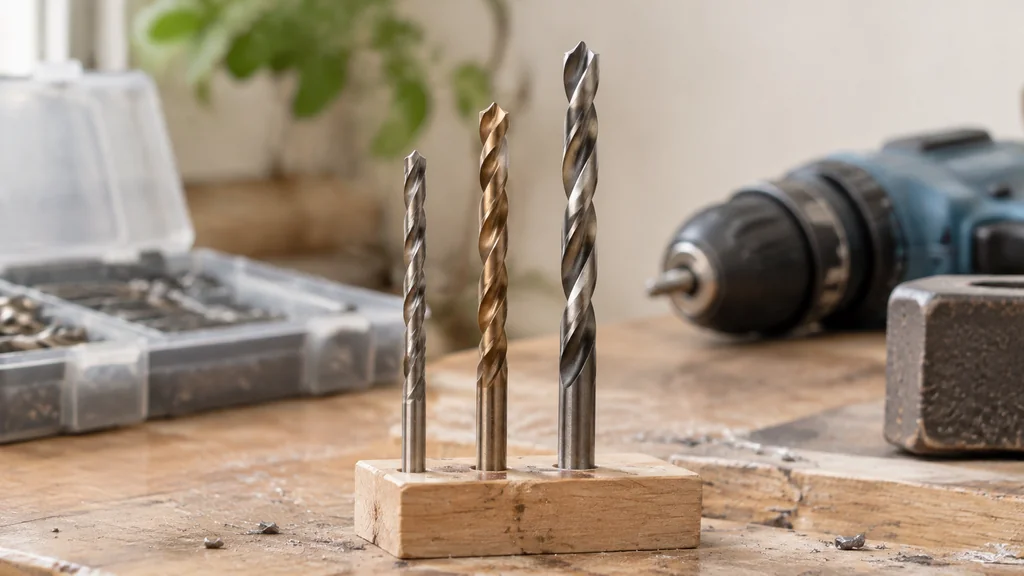
Common HSS grades include M35 and M42, with cobalt contents of 5% and 8% respectively.
What the three families actually are
High speed steel is a family of tool steels with many recipes. The recipes combine iron with carbon and hardening elements such as tungsten, molybdenum, chromium, vanadium or cobalt.
M35 carries 5% cobalt and M42 carries 8%.
Carbide is a different material from HSS.
Match the bit to the metal
Mild steel, hot-rolled and cold-rolled, is the easy case. For a home shop that is the default, and it is fine for steel angle, flat bar and bracket work.
A dull HSS bit will polish the surface and stop cutting.
Aluminium is soft, but it can stick to a hot cutting edge, so keep the bit sharp and clear the flutes often. A moderate feed produces a clean chip and prevents the material from smearing over the point. Clamp thin sheet against a sacrificial board so the bit has support as it exits.
For sheet metal, step drills and hole saws do the work better than a twist bit, and a dedicated metal-cutting approach matters more than the bit material. A step drill makes a series of shoulders, so one tool can produce several hole sizes without changing bits. It suits thin sheet especially well, provided the work is clamped and the tool is kept square. A hole saw needs a pilot drill and steady pressure. Let the teeth cut the circumference and withdraw periodically to clear chips. If you are cutting larger openings, the same rules apply as when you are cutting metal with a circular saw. Control the heat, support the work and let the tool do the cutting.
Point angles, coatings and the numbers on the box
Point angle decides how the bit enters the metal. The general-purpose point is the compromise angle. A 118-degree point is the general-purpose angle for ordinary steel work. A split point has a self-centring shape. It also has less web at the centre of the point.
The angle alone does not select the bit. Thickness, hole size, drill rigidity and the condition of the cutting edge all affect the result. If the bit is chattering, check the workholding and the feed before changing angle.
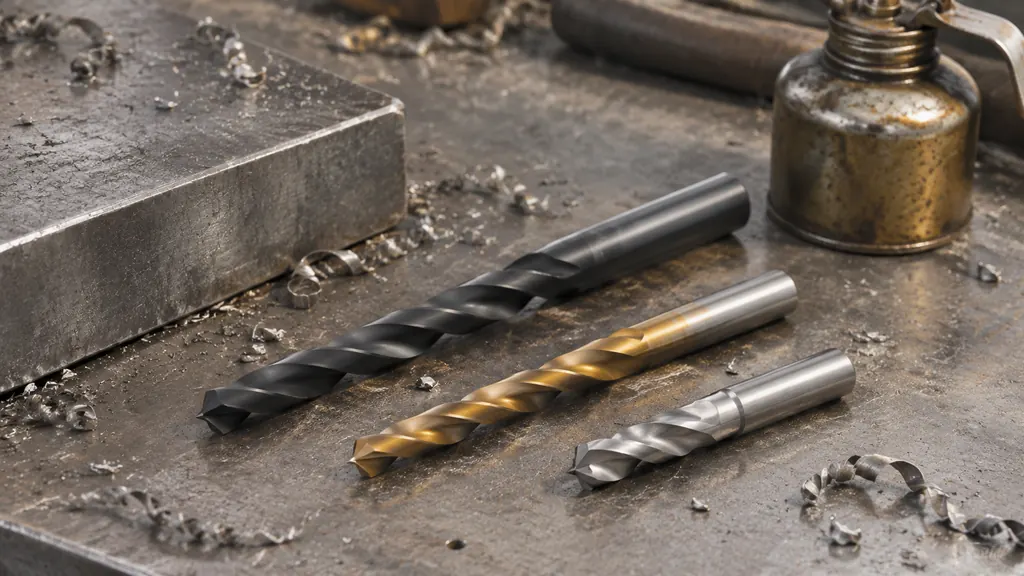
Coatings are where marketing outruns reality. Neither coating turns a soft bit into a hard one. Black oxide and Titanium Nitride are coating options for drill bits. Titanium Nitride gives a gold appearance, but sharpening removes the coating from the newly ground edge. Cobalt is a grade of HSS.
Bit geometry matters too. A long bit flexes, wanders and snaps. Buy the shortest bit that reaches the depth you need.
Deep holes need a different tool. In a home shop, if the hole is deeper than a few times the diameter, drill from both sides or step up through sizes. Do not force a long twist bit. A deep hole traps chips in the flutes and increases friction, so withdraw the bit often and clean the flutes. Peck drilling also gives cutting fluid a chance to reach the point and lets heat escape.
For a straight hole, a drill press makes alignment easier, but it cannot correct a poorly supported workpiece. Use a vice or clamps, place a backing board beneath thin stock, and check that the bit is seated fully in the chuck. A small centre-punch mark is enough for a normal twist bit. A large mark or a damaged surface can pull the point off line as the hole starts.
The bit diameter affects the starting load as well. A large bit has a wide cutting edge and can grab as it breaks through. A pilot hole removes the centre material, but it should be smaller than the finished hole without being so small that the larger bit has no stable shoulder to follow. Keep the work clamped throughout this operation.
Step by step: drilling a clean hole in steel
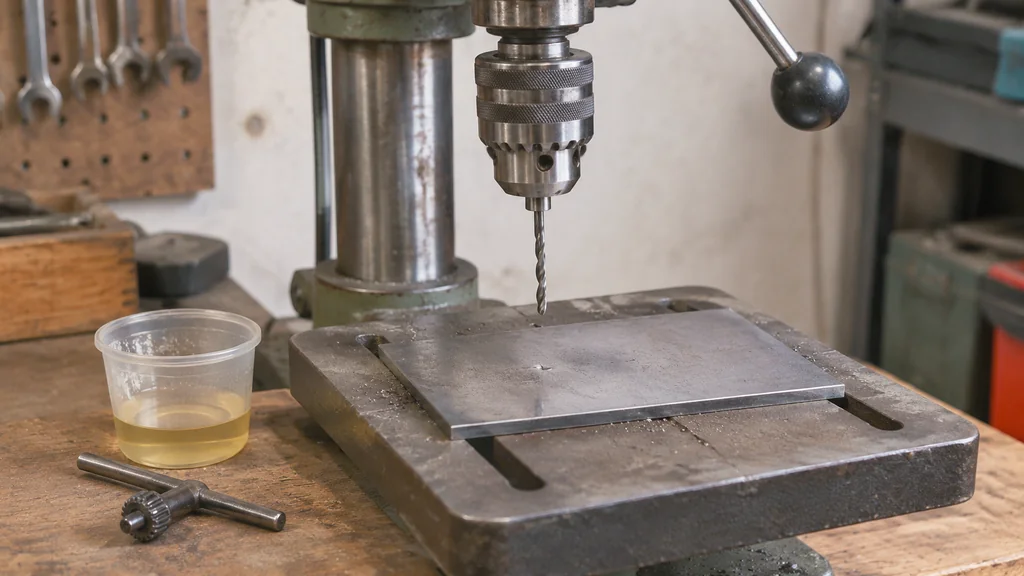
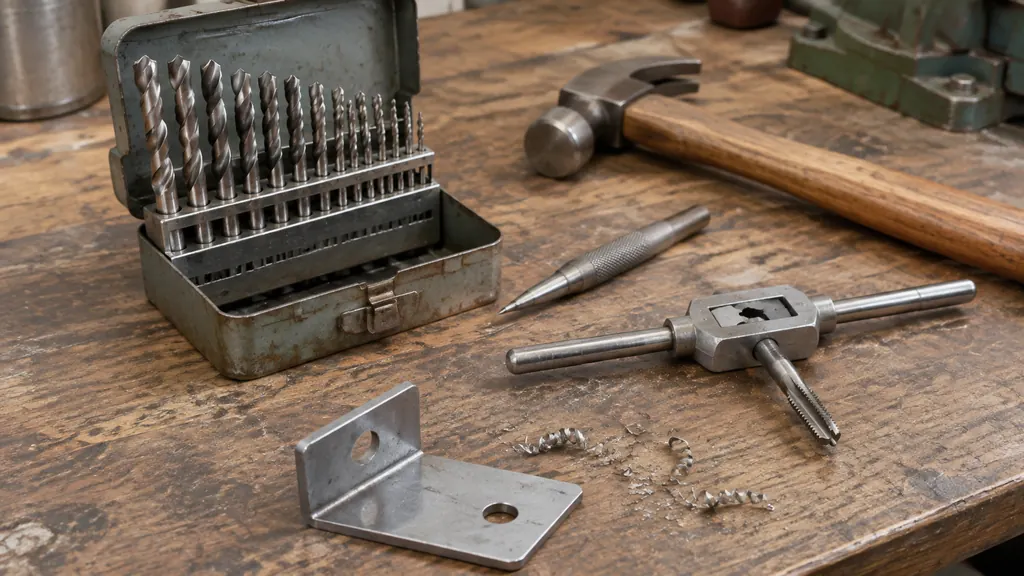
- Mark the hole with a centre punch and hit it once with a hammer. The dimple stops the bit from skating.
- Fit the shortest HSS or cobalt bit that will reach through the work, and clamp the workpiece. A bit grabbing a loose plate is how people get cut.
- Set the drill press or hand drill to a slow speed. On steel, the bit should cut a curl, not smoke.
- Apply cutting fluid or a few drops of oil at the start and again as the flutes dry out.
- Drill a pilot hole first if the finished size is large, then step up in stages. This can also help when drilling stainless.
- Ease off pressure as the bit breaks through, because the tip grabs when it exits.
- Clear the swarf and let the bit cool before the next hole.
If you are drilling into a wall to fix something, the anchor choice matters as much as the hole. The same logic applies to fastening tools, so pick the one that suits the work, as with pneumatic versus cordless framing nailers, and the bit is no different.
Speeds, feed and cutting fluid
Steel wants slow rotation and firm feed. The bit should throw a continuous chip.
Cutting fluid does three jobs. It cools, lubricates and flushes chips. For mild steel, apply a suitable cutting fluid. Use a small amount and reapply when the cut begins to sound harsh. Too much fluid can hide the workpiece and make clamping harder, while too little lets aluminium pack into the flutes. Wipe the work clean after drilling so chips do not scratch the surface.
Excess heat can affect the bit and the workpiece.
When you are drilling a lot of holes, a drill press can provide steadier feed and alignment. The speed is also repeatable. If you are setting up a shop, the same reasoning about matching the tool to the job applies as with a track saw versus a table saw for sheet goods. The right tool makes the work safer and faster.
Common mistakes and when to stop drilling
The first mistake is using a wood bit on metal. HSS, cobalt HSS and carbide are options for different drilling jobs. Choose according to the material, hole size and rigidity of the setup.
The second is running a bit too fast.
The third is drilling stainless with a dull bit. If the surface begins to resist the cut, the bit may skate and the hole may become harder to start. Check the bit and cutting conditions before continuing.
The fourth is using a bit that is too long. A long bit flexes, the hole wanders and the tip snaps. Use the shortest bit that reaches.
The fifth is skipping the pilot hole on large diameters. A large bit in a hand drill grabs and the workpiece spins.
Stop and reassess if the bit will not cut after a few seconds of firm pressure, if the hole is smoking, or if the bit is walking across the surface. Those are signs of the wrong bit, the wrong speed or a dull edge.
When to call a pro
Most home drilling is a home job. Call someone if you are drilling into structural steel, if the hole needs to be precise to a tolerance, or if you are working on a pressure vessel or a vehicle chassis.
If the hole is in a load-bearing member, stop and get advice before you drill. A hole in the wrong place in a beam or a joist is a structural question, and no drill bit fixes that.
Drill Bits for Metal FAQ
Can I use an HSS bit on hardened steel?
The choice for hardened steel depends on the steel hardness, hole size and machine stability. HSS, cobalt HSS and solid carbide are different options whose suitability depends on those conditions.
What point angle should I use for metal?
One hundred and eighteen degrees is the general-purpose angle for mild steel and most home work.
Why does my drill bit keep wandering on metal?
The surface is too smooth and the bit has nothing to bite. Use a centre punch to make a dimple, start with a small pilot bit, and keep the drill square to the work.
Thank you for reading!