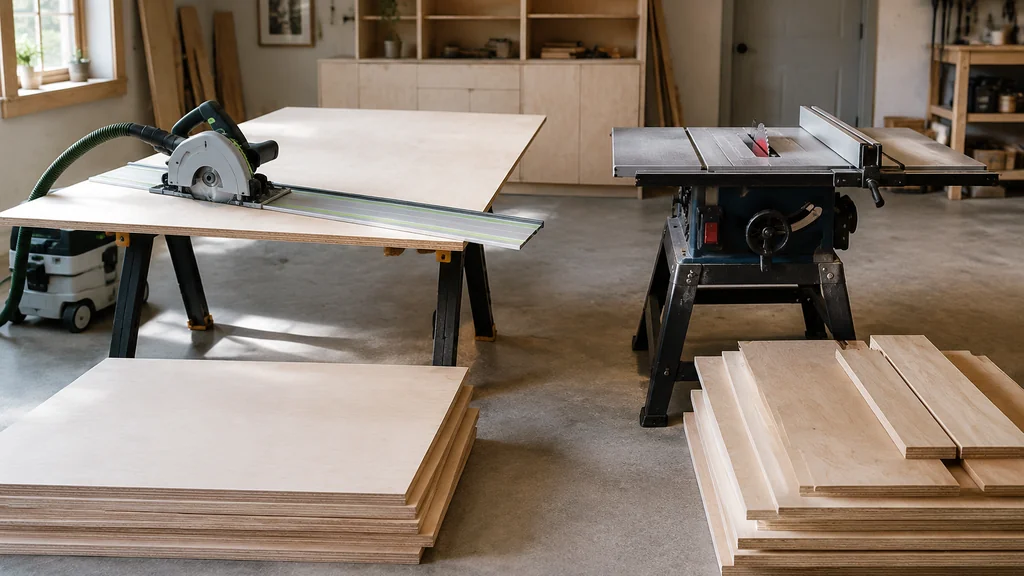
For breaking down full sheets of plywood or MDF, a track saw wins for most home shops. You lay the track on the panel, set the depth, and cut a straight line with the sheet flat on the floor or a pair of sawhorses. A table saw earns its place when you need repeatable rips of narrow stock and joinery, but it struggles with a full 4×8 sheet unless you have the infeed and outfeed room to feed it safely.
What Each Saw Actually Does With a Full Sheet
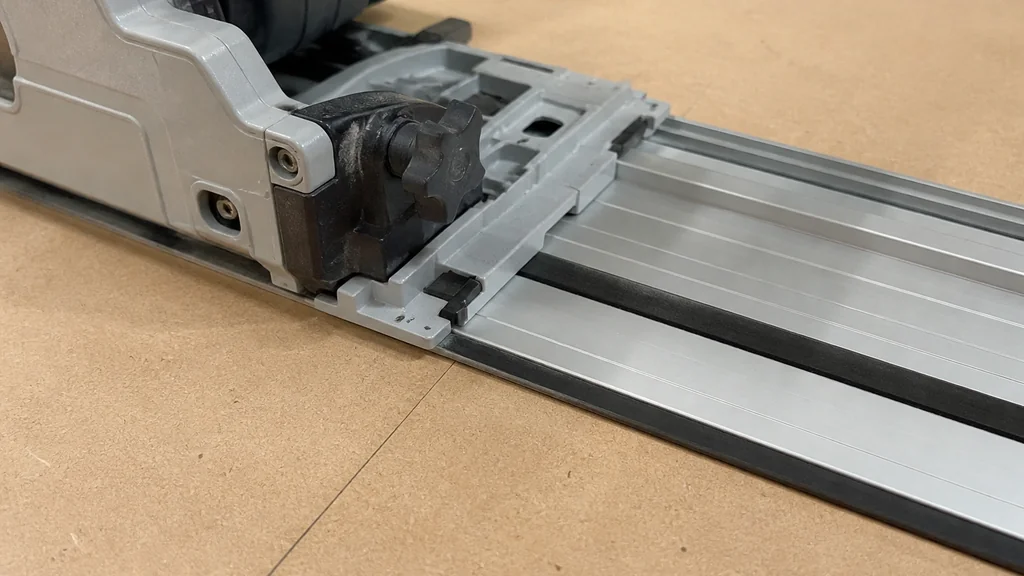
A track saw is a circular saw that rides a straight guide rail. The rail has a rubber strip that sits on your cut line, so the blade edge trims the strip on the first pass and every cut after that lands exactly where the rubber ends. That is the whole trick. You do not measure to the blade, you measure to the rail.
A table saw cuts against a fence with the sheet moving over a fixed table. That works beautifully for narrow rips and for stock you can control with both hands. A full sheet is a different job. On most contractor saws the table is small, the sheet is heavy, and you are pushing a floppy panel past a spinning blade with your hands close to it. That is where accidents happen, and it is why so many shops break sheets down with a track saw first.
Where the Track Saw Wins
- Full sheets stay flat. The panel lies on the floor or on foam, so it does not sag or bind.
- No infeed or outfeed space needed. You need room to walk, not room to feed.
- Clean edges on veneered plywood. The rail supports the fibers on both sides of the cut, which limits tear-out on the top face.
- Straight cuts on installed material. You can trim a door or a countertop in place.
- One person can do it. No helper holding the far end.
The trade-off is speed on repeated narrow strips. Every cut needs the rail clamped or held, and you reset the rail each time.
Where the Table Saw Wins
- Repeatable rips. Set the fence once and cut twenty identical strips.
- Joinery. Dado stacks, tenons and rabbets need a fixed table and a fence. If you cut dados, read up on dado blades and stacks: setup and safety before you mount one, because the setup rules matter more than the cut.
- Small parts. Anything shorter than the rail is awkward on a track saw and natural on a table saw.
- Blade choice. A table saw takes a full range of blades, and matching tooth count to material makes a real difference, as covered in circular saw blades: tooth count and material match.
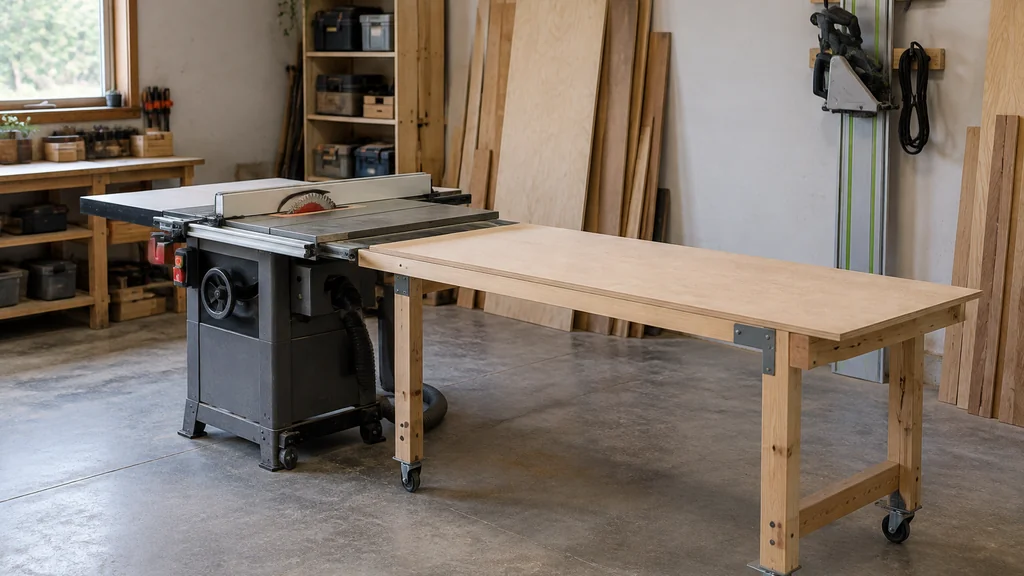
A table saw with a long fence and a big outfeed table can break down sheets. Most home shops do not have that footprint, and a short fence on a small table is where kickback starts.
The Step-by-Step for Breaking Down a Sheet With a Track Saw
This is the procedure I use on every cabinet job.
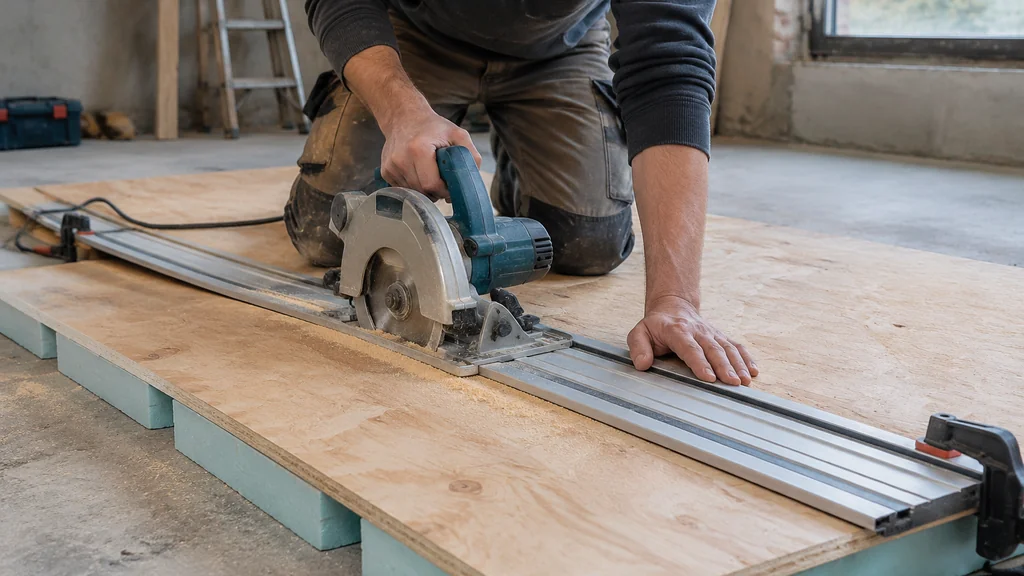
- Lay the sheet on rigid foam insulation boards on the floor, or on two clean sawhorses with a sacrificial strip under the cut line.
- Mark the cut on the good face and extend the line past both ends with a square.
- Set the rail so the rubber strip sits on the waste side of the line. Check the offset once with a scrap and trust the strip after that.
- Set the blade depth so the teeth clear the panel by a few millimetres. Check the spec sheet for your saw, and never cut deeper than you need.
- Clamp the rail at both ends, or use the non-slip backing if the surface is clean and dry.
- Connect the dust extractor. On MDF this is not optional for your lungs.
- Start the saw before the blade touches the panel, keep the base flat on the rail, and cut at a steady speed without stopping mid-cut.
For a long rip, kneel on the rail side and walk the saw. Do not reach across the cut.
Cost, Space and Safety
A track saw plus one rail costs less than a cabinet-grade table saw, and it stores against a wall. That matters in a garage shop where the car still needs to fit. A table saw needs clearance on all four sides, and the bigger the sheet, the more clearance you need.
On safety, the track saw keeps your hands behind the motor and away from the blade line. The blade is guarded and the panel is supported. A table saw exposes the blade at the top of every cut, and a full sheet on a small table is the classic kickback setup. If you are new to the table saw, learn it on narrow stock with a push stick before you try a panel.
Mistakes I See on Both Tools
- Cutting on the wrong side of the line. On a track saw this ruins the panel. Mark the waste side and check before you clamp.
- Letting the sheet sag. Support the whole panel, not just the ends. A sagging sheet pinches the blade.
- Dull blade on melamine or MDF. Tear-out and burning follow. Change the blade, do not push harder.
- No dust extraction. MDF dust is the worst of the sheet goods. Use a extractor rated for fine dust.
- Skipping the rail clamp on slick surfaces. The rail can creep on a polished face.
- Reaching over a running table saw blade. Stop the saw, then move.
When to Call a Pro
If the job involves structural panels, fire-rated assemblies or a finished cabinet run that has to be square to a wall, bring in a carpenter. Cutting is the easy part. Knowing what the panel has to do, and how it attaches, is where a pro earns the money. The same logic applies to trim and framing cuts on a miter saw, where bevel and detent setup decides whether the joint closes, as explained in miter saw sizes and bevel types explained.
Track Saw vs Table Saw FAQ
Can a track saw replace a table saw?
For sheet goods, mostly yes. For repeatable narrow rips and joinery, no. A track saw can handle 4×8 panels; whether you need both tools depends on your projects and workspace.
Do I need a Festool track saw?
No. Premium track saw systems are well regarded, but several makers sell saws and rails that cut straight and stay on the line. Buy the rail system you can get blades and spare strips for.
How thick a sheet can a track saw cut?
It depends on the saw and the blade. Most plunge saws handle common panel thicknesses, but check the spec sheet for your model before you buy a thicker panel.
Is a table saw safer than a track saw?
Neither is safe without technique. The track saw keeps your hands further from the blade line on sheet goods, and the table saw demands push sticks and a clear path around the table. Learn one tool at a time.
Can I cut a sheet with a circular saw and a straight edge?
Yes, and many carpenters do it with a clamped straight edge. A track saw is the same idea with a rail that the saw base locks onto, which makes the cut repeatable and the edge cleaner.
Thank you for reading!