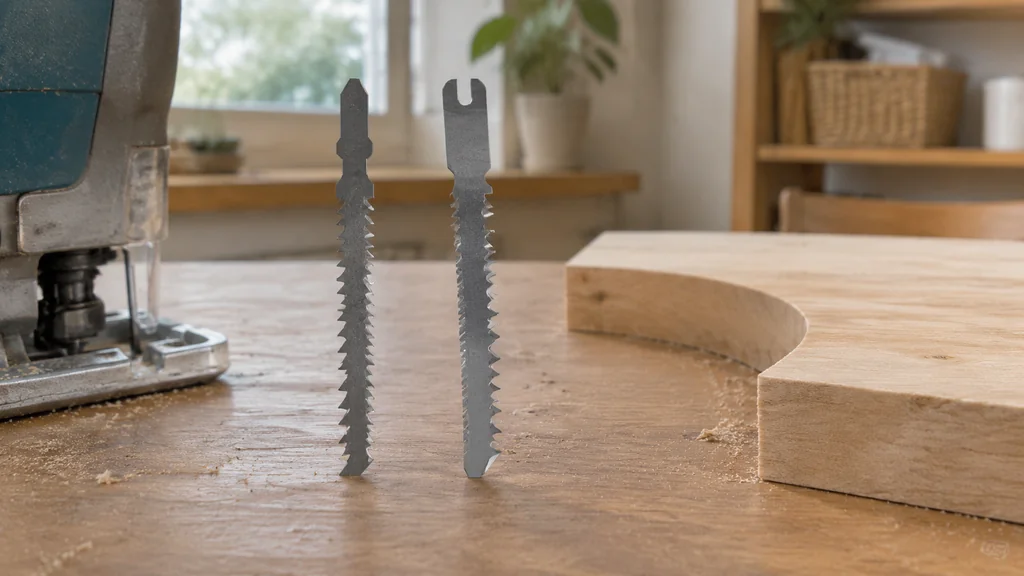
The U-shank is an older blade-shank style that may still be found on some jigsaws. If you cannot tell which one your saw takes, the clamp itself answers the question before you buy anything.
What the shank actually does
The shank is the part of the blade that goes into the tool. Everything the saw knows about the blade, it learns there. Clamp designs commonly engage either a notch on the back of the tang or two prongs. Check the saw manual for the retention mechanism and fit.
A blade that fits badly can wander in the cut. Check the blade and clamp fit before use. On many T-shank designs, the notch sits on the trailing edge of the tang and the clamp engages with it. Verify the mechanism in the saw manual. The U-shank blade has a hole through the shank with two legs either side.
Shank style does not change the tooth geometry. A 10 TPI blade cuts the same way in either fitting. The kerf is set by the blade’s body. The tang does not set it. If you want to understand how the width behind the teeth affects your line, read Kerf Explained: How Blade Width Changes Your Cuts for an explanation of the kerf in a saw cut.
How to tell which blades your jigsaw takes
Pull the blade out and look at the hole it came from. That is the direct test, and it takes less time than reading a box. The clamp gives you useful information even when the blade is already removed. Photograph the opening if you need to compare it with replacement packaging later. Keep the saw disconnected while you inspect it, and check for packed sawdust that could obscure a pin, slot or spring.
- Unplug the saw, or pull the battery, before you touch the clamp.
- Release the blade clamp. On most models it is the lever at the front of the saw body; on others it is a collar you twist.
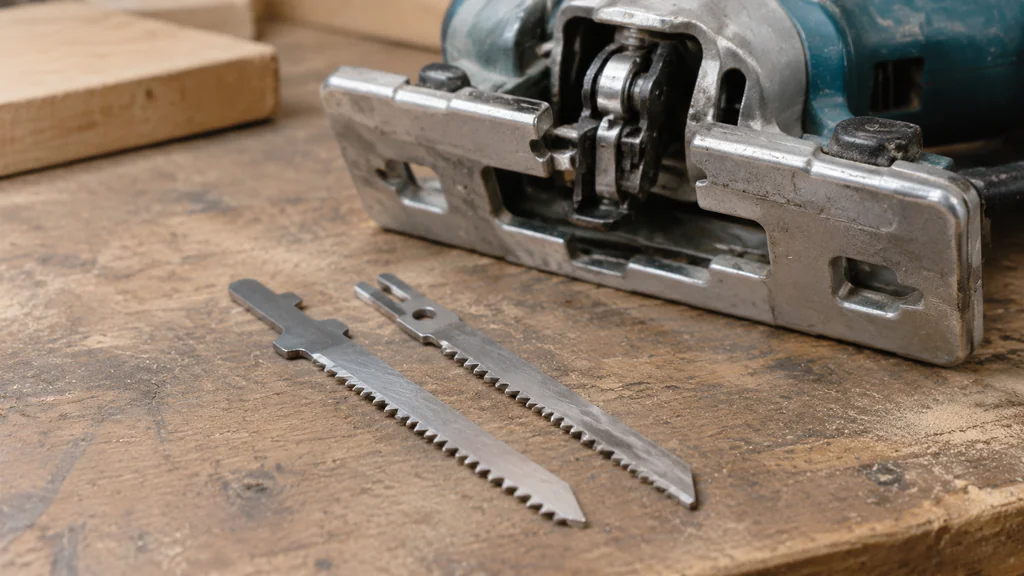
- Withdraw the blade and look at its shank. A single flat tang with a notch on the back is T-shank. Two prongs with a hole between them is U-shank.
- Look into the empty clamp. If you see a slot and a pin, it commonly indicates T-shank. If you see a socket that grips the outside of two prongs, it commonly indicates U-shank. Check the saw manual to confirm the fit.
- Check the clamp for packed sawdust, a damaged pin or a bent retaining surface. Clean loose debris without putting your fingers into the opening.
- Note the blade length and width your saw’s shoe and blower will accept, then buy blades of that family.
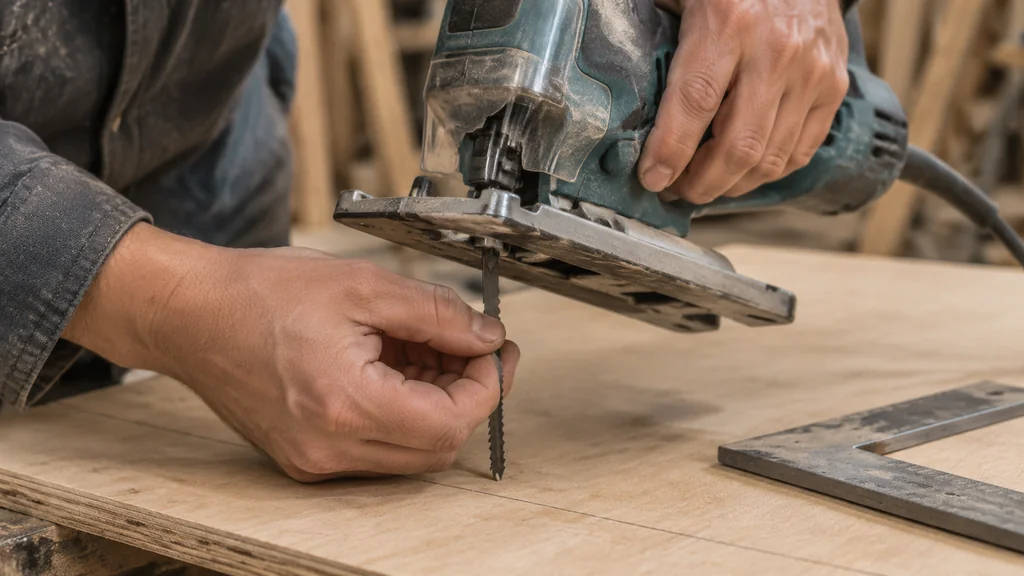
- Test the fit with the saw off, pull the blade gently, and only then plug in and run it briefly.
A quick sanity check on the saw helps here. The rating does not identify the shank family, but it can help you compare the tool with the work you expect it to handle. A compact saw may have less room around the clamp and shoe, while a larger saw may accept longer blades and provide more support. The manual remains the useful source for the permitted blade dimensions and clamp procedure.
Do not force a U-shank blade into a T-shank clamp and do not file a tang to make it fit. You lose the shoulder the clamp registers against, and the blade can pull out mid-cut close to your fingers.
T-shank blades: what you get and what to watch
The clamp holds the blade at one point on the back edge, and the body of the blade is supported by the shoe and the roller guide behind the cut.
The teeth are usually milled and set, and the shank itself is stamped.
Some T-shank designs rely on a pin engaging the notch. Inspect the clamp and check the blade alignment with a square after loading it, especially when cutting joinery. Push the blade fully home before checking it. The back of the blade should meet the roller guide without being forced sideways. A small amount of clearance can be normal, but visible rocking at the tang or a blade that shifts when pulled gently points to a retention problem. Replace the clamp or saw if the play is obvious.
U-shank blades: the older standard
The U-shank is held by the prongs. It works reliably when the clamp is in good condition, although some older clamp designs may offer less repeatable positioning. Before cutting, inspect both prongs for bends, cracks and heavy wear. The hole and outer edges must sit fully in the retaining parts of the clamp. If the blade enters at an angle, remove it and inspect the socket for debris. Do not correct the angle by force. A worn U-shank can move under load even when the blade appears secure while stationary.
The practical risk is buying the wrong box. Blade packaging is small, and the shank is the last thing you check when you are in a hurry. Read the description for the shank family before comparing tooth pitch, blade length or cutting material. Keep one removed blade with the saw if you store several tools together. It gives you a physical reference when labels are unclear, and it also helps you notice when a replacement blade has a different body width or overall length.
Matching the blade to the material
The shank gets the blade into the saw. The tooth pitch and the blade material decide whether the cut is clean. Pick both before you start, because a jigsaw is unforgiving of the wrong blade in a visible cut.
For softwood and plywood, a blade with fewer, coarser teeth clears the chips fast and cuts quickly. For hardwood, veneered board and laminate, a finer pitch gives a cleaner edge but cuts slower and heats up faster.
For curves, use the narrowest blade your work allows. A wide blade may not follow a tight radius. Forcing it can twist the shank and stress the clamp. Mark the entry and exit points first, then let the blade follow the line without twisting the saw body. On plywood, support the sheet close to the cut so vibration does not turn a controlled curve into a wandering one. A fine-tooth blade can leave a cleaner edge in laminate, while a coarse blade can clear chips more effectively in thicker softwood.
Blade life, breakage and the mistakes that cost money
Common causes include excessive feed pressure, dull teeth and a loose clamp.
Do not lean on the saw to make it cut faster. Let the teeth do the work and keep the shoe flat on the surface.
Do not cut through a board blind and hope. Inspect reclaimed timber for embedded metal before cutting, and choose a blade suited to the material. Do not start a cut with the blade touching the work, with the saw already running; let it reach speed first, then bring it to the line.
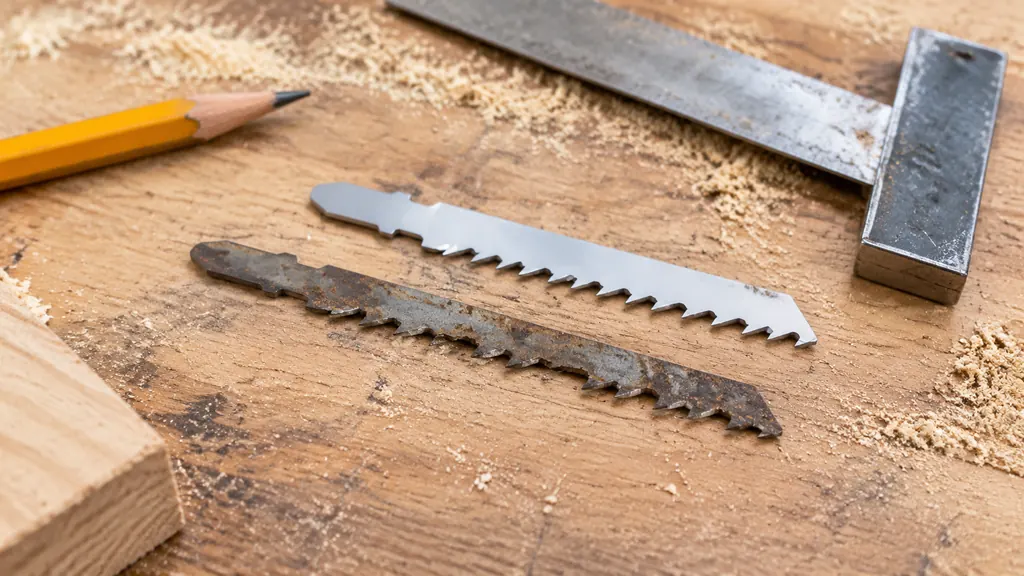
Replace blades with missing teeth instead of keeping them for rough work. Also retire a blade when the cut begins to drift despite steady pressure, when the teeth produce excessive burning, or when the blade has been bent by a stalled cut. Let the blade cool before handling it, because friction can make the body hot even after the saw stops. Sort usable blades by tooth pitch and material so a replacement can be chosen without guessing at the workbench.
And do not cut over the cord. That sounds obvious until you are three cuts into a sheet of plywood on sawhorses. Route the cord behind you, or use a battery saw, and never reach across a running blade to move the workpiece.
When to call a pro, and when to buy a different saw
A jigsaw is commonly used for household projects. If you are cutting a worktop for a sink, a curve in a staircase stringer, or a shape in a counter that has to meet a wall cleanly, that is finish work and the tolerance is tight. The counter is not the place to learn.
Call an electrician if the saw’s cord is damaged or the switch is intermittent. Do not tape a cord and keep cutting. And if your saw’s clamp will not hold a blade squarely after a clean, sharp blade has been tried, the tool needs a part, not a workaround.
The tool may be wrong for the job. A circular saw cuts long straight lines in sheet goods faster and straighter. If you are cutting metal sheet or thick plate, a circular saw with the right blade is the better tool, and cutting metal with a circular saw covers the blade choice and the safety side properly. For demolition cuts and other jobs that need a different motion, Reciprocating Saw Basics explains how that tool uses its blades. A jigsaw is for curves, cutouts and plunge cuts, and it does those well when the blade fits.
Jigsaw blade shank FAQ
Will a U-shank blade fit a T-shank jigsaw?
No. A T-shank clamp commonly engages with a notch on the tang, while a U-shank blade uses a different shank shape. Check the saw manual before using an adapter, and buy the blade family your saw was built for.
How do I know which blade my saw takes without the manual?
The empty clamp identifies the blade family through its retention shape. A slot and pin indicate T-shank, while a socket that grips two prongs indicates U-shank. Disconnect the saw, remove the blade, and inspect the clamp before buying a replacement.
Can I sharpen a jigsaw blade instead of replacing it?
Replace a blade when its teeth are rounded or missing. Follow the blade and saw manufacturer’s guidance for any sharpening or maintenance.
Why does my blade keep coming loose?
Clean the clamp, seat the blade until it clicks or bottoms out, and test the fit with the saw unplugged. If a new blade still moves, the clamp needs replacing.
Are T-shank blades more expensive?
Price tracks the blade material and tooth geometry. The tang shape is not the pricing factor.
Thank you for reading!