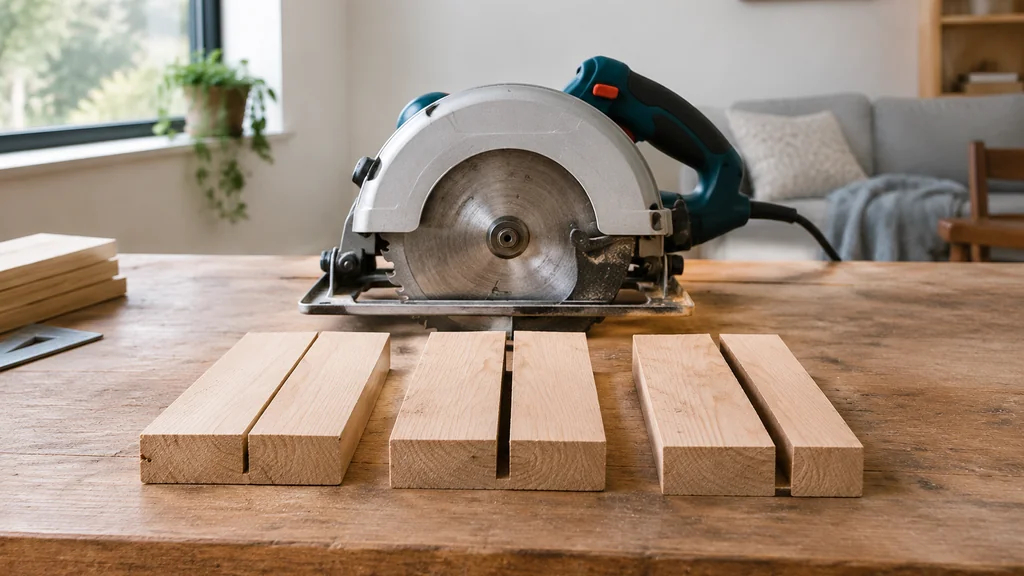
Kerf is the width of the slot a blade leaves behind, and it is always wider than the plate of the blade because the teeth are set out to the sides. That gap is real material you will never get back, so every cut you make on a saw reduces the board by roughly the width of the kerf. Plan your parts around it before the first pass, and you will avoid the classic mistake of cutting a piece too short on the last rip.
What Kerf Actually Is
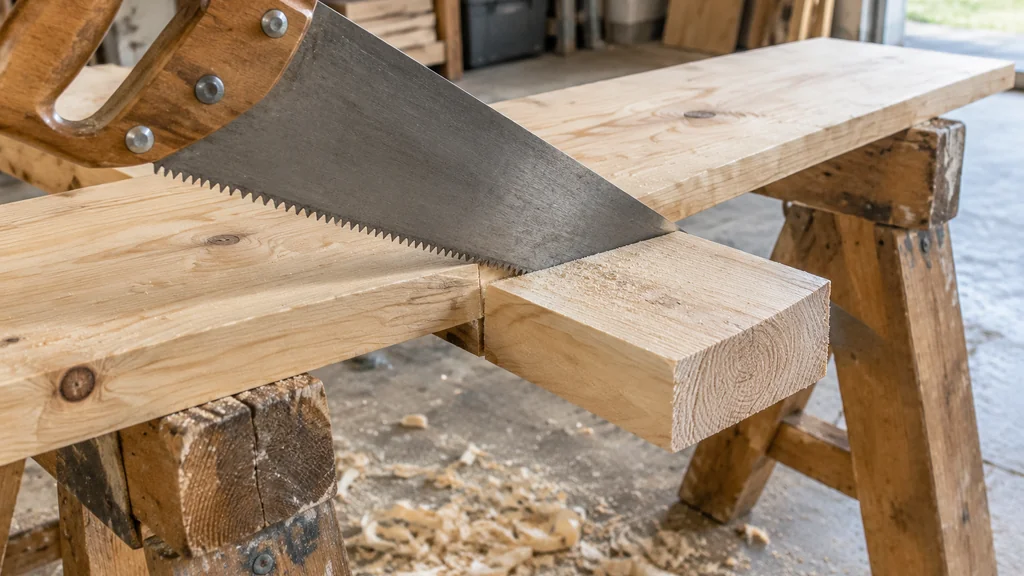
Push a handsaw through a pine board and look at the gap behind the blade. That gap is the kerf. The saw teeth do not slice the wood apart like a knife. They chisel out a channel, and the width of that channel is what the blade needs to move without binding.
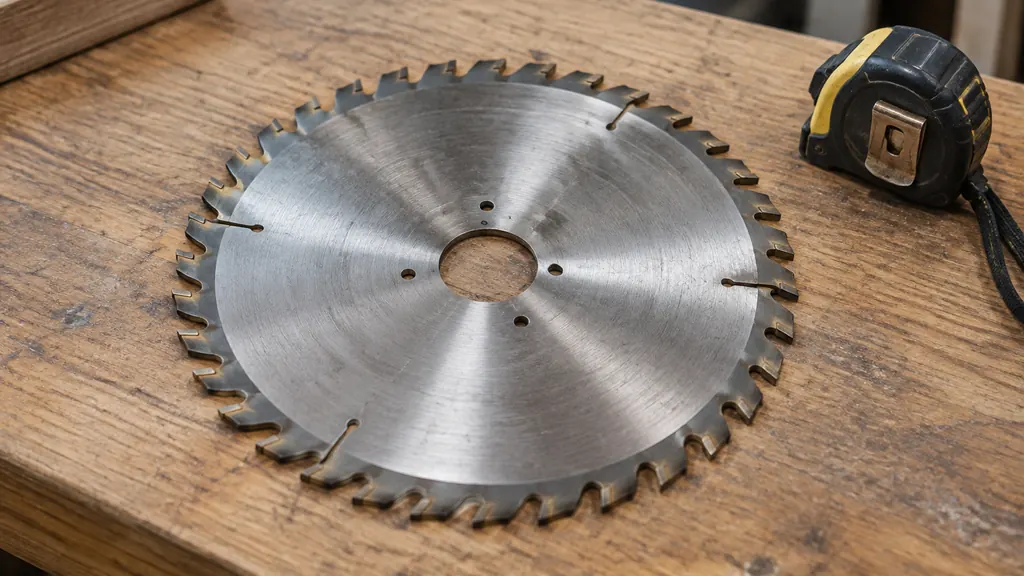
A handsaw blade carries what is called set. The teeth are bent alternately left and right, so the cut runs slightly wider than the steel plate itself. Without that set, the plate would rub against the walls of the cut, the saw would jam, and the teeth would overheat from friction. Carbide-tipped blades on a table saw or miter saw do the same job with tips that stand proud of the plate.
So the number that matters is not the thickness of the blade body. It is the full width across the teeth.
Why Tooth Set and Blade Type Change the Number
Two blades for the same saw can leave very different gaps. A thin-kerf blade on a circular saw may eat noticeably less material than a full-kerf blade, and that difference decides how you lay out a cabinet side or a shelf.
Rough guide to what shifts the number:
- Thin-kerf blades remove less stock per pass. Useful on a track saw or when you are breaking down expensive plywood and every millimeter counts.
- Standard full-kerf blades are stiffer. They resist deflection better and give a cleaner edge in thick hardwood.
- Japanese pull saws and many handsaws use a fine set that leaves a narrow slot, which suits joinery and trim.
- Reciprocating saw blades may have a set that varies along the length, so the slot width is not constant.
- Abrasive wheels and metal-cutting discs do not have teeth at all, but they still remove a band of material, and that band is the kerf.
If you want the exact width for a specific blade, check the label on the packaging or the spec sheet. Do not guess from looks. A blade with a worn or damaged set may cut wider than its stated number, and a new blade in the same slot may not.
How Kerf Affects Layout and Part Dimensions
Here is where most DIY projects go wrong. You measure a space, cut a part to that measurement, and then find that two pieces butted together are wider than the gap they are meant to fill once you account for the saw cut.
Suppose you need two boards to fill a fixed opening. Each cut takes material. If you rip both parts to the full target width, the kerf from the second cut comes off the part you already cut, and the total comes up short. The fix is to plan cut order so the kerf falls on the waste side, and to add the kerf to your stock allowance.
Work this way:
- Mark the finished sizes of every part.
- Note the kerf width for each blade you will use, from the label or spec sheet.
- Add the kerf to your rough stock length for each cut that comes off a shared board.
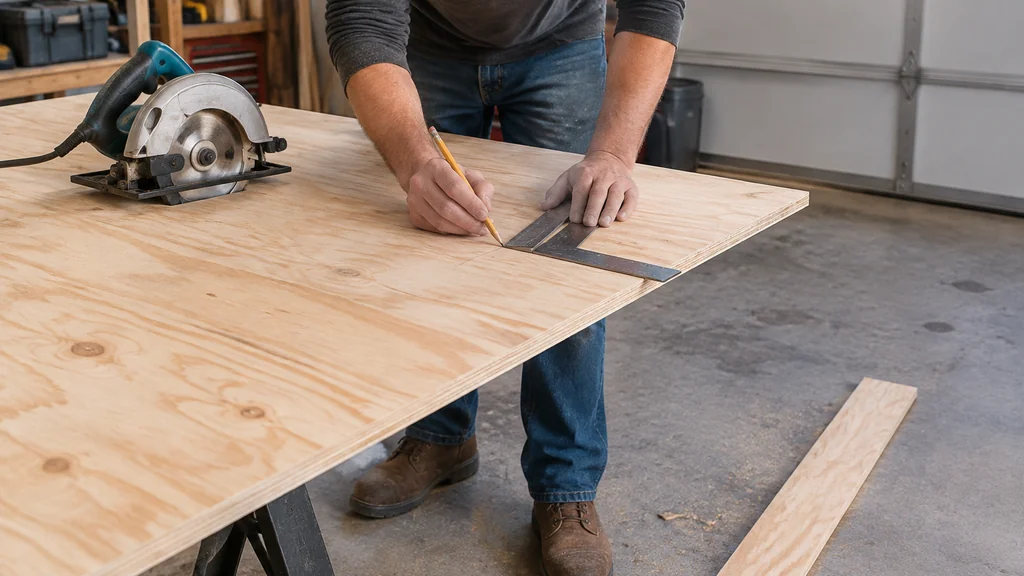
- Mark the waste side of every line with a pencil and keep the blade on that side.
- For repeated parts, set a stop on the fence and cut one test piece to check the actual result.
- Measure the test piece with a tape and confirm it matches your target before cutting the run.
On sheet goods, the same logic applies, and it pays to know whether a track saw or a table saw suits your layout. The comparison at track saw vs table saw for sheet goods walks through which tool is the better fit for breaking down large panels.
Kerf on the Jobsite: Reclaimed Wood, Trim, and Metal
Reclaimed lumber is where kerf discipline really shows. Old boards may already be under the size you need, and one careless rip can ruin a piece you cannot replace. Measure twice, mark the waste side, and make the first cut on scrap to confirm the blade is cutting where you think it is.
Trim work has its own trap. Baseboard and casing have to meet at inside corners, and if you cut both pieces to the exact wall length, the kerf and the wall’s out-of-square corner will fight you. Leave a small allowance on the first piece, fit it, then scribe and cut the second.
Metal cutting is a separate case. An abrasive chop saw disc takes a wide band out of the stock, and a cutoff wheel on a grinder takes a narrower one. Either way, the cut face is not the finished face, and you should plan for dressing the edge. The guide on cutting metal with a circular saw covers the blade choices and the safety steps for that job.
For demolition work, kerf width stops mattering and blade choice takes over. The article on reciprocating saw basics, blades, and demolition cuts explains which blades survive that abuse.
Safety and Common Mistakes
The kerf is also a safety detail. A blade that binds in a cut is a blade that can kick back. If you force a saw through a slot that is too narrow for its plate, or if the wood closes on the blade as it dries and stresses, the saw will climb. That is why the set matters and why a dull blade is a dangerous blade.
Mistakes I see repeatedly:
- Cutting on the line instead of beside it. The kerf takes the line, and the part comes out narrow.
- Assuming every blade is the same width. Swap blades mid-project and your stop is now wrong.
- Ignoring kerf when mitering trim. Two short pieces leave a gap at the corner.
- Forcing a dull blade. It cuts wider, wanders, and overheats.
- Cutting wet or green lumber and expecting a clean edge. The wood moves as it dries.
If a cut matters, make a test pass on scrap first. It takes thirty seconds and saves a board. Wear eye protection and hearing protection, and keep the blade guard working. That is not optional, and no shortcut is worth a finger.
When to Call a Pro
Most kerf planning is arithmetic and care, and you can handle it yourself. Call a professional when the cut is structural, when you are working with engineered beams, or when the job needs a machined fit that a jobsite saw cannot hold. A cabinet shop with a sliding table saw will hit tolerances your circular saw will not, and on a kitchen or a built-in, that difference is visible.
Also step back when a cut involves gas lines, load-bearing walls, or anything your local rules treat as permitted work. Check the label, check the local code, and get a licensed trade in.
Kerf FAQ
Does kerf width really change the finished size of my part?
Kerf width does change the finished size of your part. The blade removes material on every pass, so the part is always smaller than the line you cut along if the blade lands on the line itself. Cut on the waste side, and add the kerf to your rough stock when you plan the run.
Is a thin-kerf blade always better?
No. It removes less material, which is handy on expensive sheet goods, but it flexes more under load. For deep cuts in hardwood, a stiffer full-kerf blade usually gives a cleaner, safer result.
How do I find the kerf for a blade I already own?
Check the packaging, the spec sheet, or the manufacturer’s listing for that blade. If you cannot find it, make a test cut in scrap and measure the slot with a tape or calipers.
Can I ignore kerf when cutting trim?
Not if you want tight corners. Trim cuts compound the error, and two short pieces leave a visible gap at a miter. Leave an allowance on the first piece, fit it, then scribe the second.
Does kerf matter when cutting metal?
Yes, though for a different reason. An abrasive disc removes a wide band and leaves a rough edge, so you plan for dressing the cut face. A cutoff wheel takes less, but it still removes stock you have to account for.
Thank you for reading!