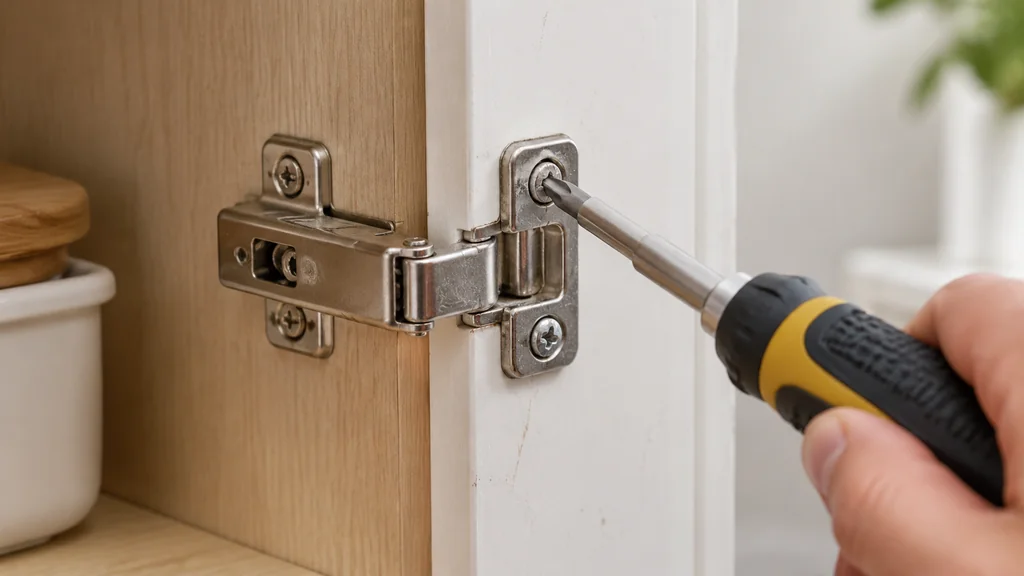
A stripped or rounded screw head has lost the crisp edges that let a driver bite, so the fix is always the same. Create new grip or new rotation. You add friction on top of the head, cut a fresh slot, or drill a pilot hole and drive an extractor into it counterclockwise. Work slowly, keep the driver square to the screw, and stop before you chew the head into a smooth dome.
Why Screws Strip in the First Place
A head strips for a handful of reasons, and the fix depends on which one applies. The most common cause is a worn or cheap bit. A bit with rounded corners cannot transmit torque, so it spins and polishes the recess instead of turning the fastener. In Torx and Phillips drives, the driver must fit the recess fully; a slightly undersized tip is a slow-motion destroyer.
Corrosion or paint is the second cause. A screw that has been painted over or rusted into a hinge has effectively been glued in place. This matters most on exterior work. A hinge screw on a painted door, or a machine screw in an aluminum frame, is tight and effectively bonded. Turning harder only makes the head worse.
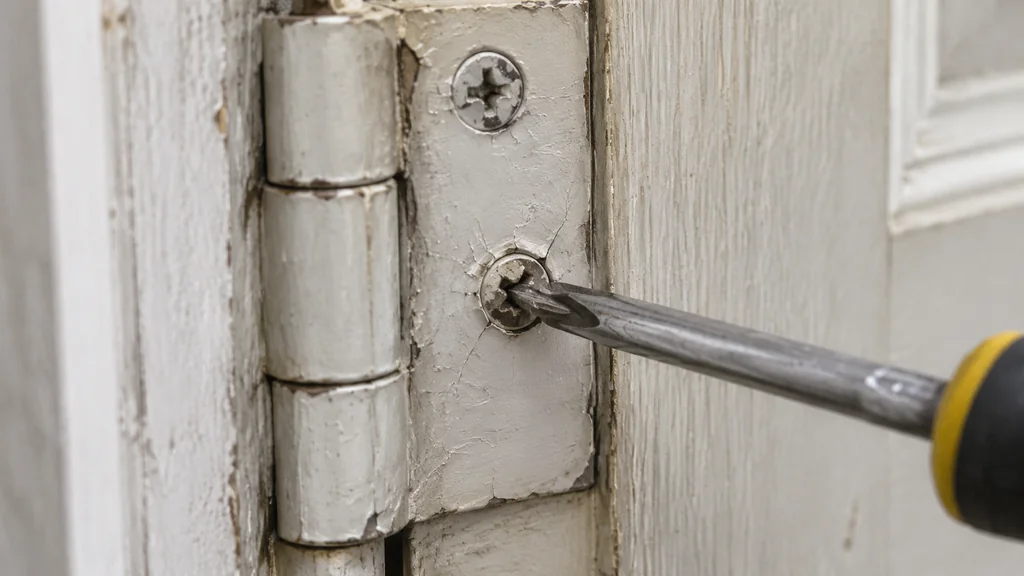
A third cause is technique. Pushing the driver at an angle, or with too little downward force, lets the bit climb out of the recess. That single habit, repeated, is what turns a tight screw into a rounded one. Before you blame the screw, check the bit and your grip.
Start With Grip, Not Force
Before you reach for a drill, try the cheapest fix. It works more often than people expect, especially on a screw that is only slightly worn.
Press harder than feels natural. Push the driver into the head with real body weight while turning slowly. Most cam-out happens because the bit climbs out of the recess, and steady downward pressure keeps it seated.
Switch to a fresh bit. A new #2 Phillips or the correct Torx bit often solves it outright. If the recess is a Phillips, the matching bit is the one with the right point profile, not the longest one in the box.
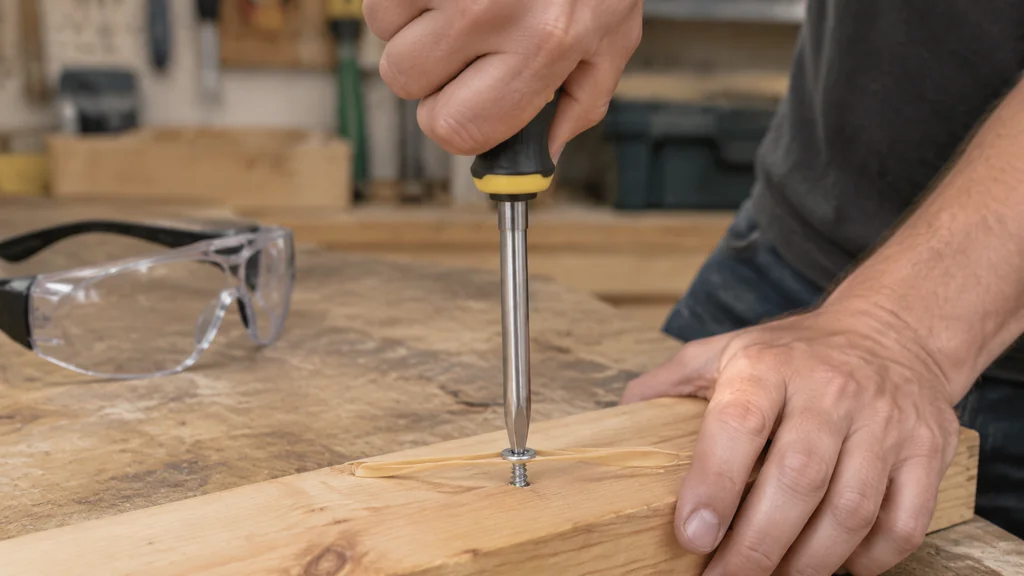
Add friction. A wide rubber band laid flat over the head gives the bit something to bite. So does a dab of valve grinding compound, which is abrasive grit in a paste. Both are cheap, and both are worth trying before you cut anything.
Try a different driver type. If the cross is gone but the head is intact, a slightly larger flathead may catch the remaining slots. On a Torx screw, a flathead can sometimes bridge two worn lobes.
If the screw still will not move, stop. Every extra second of spinning removes more metal, and once the head is a smooth dome your options shrink fast.
Use an Extractor Bit the Right Way
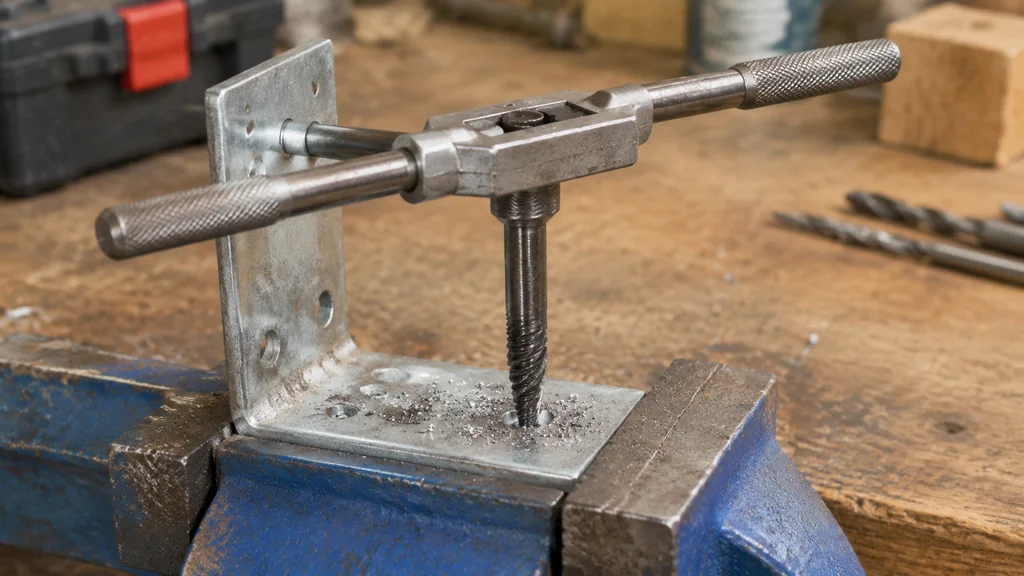
An extractor is a hardened, tapered bit with reverse flutes. It bites into a drilled hole and turns the screw counterclockwise. The steps are not complicated, but the order matters.
- Center punch the head so the drill does not wander on the curved surface.
- Check the number stamped on the extractor and drill the pilot hole to the size its instructions give.
- Drill straight and no deeper than the screw is long.
- On a broken screw shank, drill into the shank itself.
- Seat the extractor and tap it in lightly with a hammer so the flutes engage.
- Turn it counterclockwise with a tap wrench or a bit holder, keeping steady downward pressure.
- Back it out slowly once it grabs.
Two rules keep you out of trouble. Use the extractor at low speed, and never drill deeper than the screw is long. A deeper hole will punch through the back of the material, and on a hollow-core door or a thin panel that means a hole you now have to patch. In harder materials, the same discipline that keeps a bit cool on stainless applies: check the drill speed on the bit or tool label and let the cutter do the work, as covered in this guide to drilling stainless steel without ruining the bit.
Do not use an impact driver for extraction. Hammering a tapered reverse bit into a worn recess can cam it out sideways in an instant. If you are not sure which tool suits the job, read up on the impact driver vs drill difference before you commit.
Cut a New Slot When the Head Is Gone
If the head is too far gone for an extractor, or the screw is tiny, cut a slot and use a flathead driver. A rotary tool with a thin cutoff wheel, or a hacksaw blade for a screw that stands proud, will cut a groove across the head in a few seconds.
Cut deep enough for the driver to seat, but not so deep you cut the head in half. Keep the wheel moving so you do not blue the metal or burn the surrounding finish. Use the widest flathead that fits the slot, because a narrow driver will just wallow it out.
On a screw set below the surface, protect the surrounding wood with a piece of tape or a metal shield. For a screw that is stuck because of paint or corrosion, heat helps more than muscle. On a painted hinge, score the paint around the screw head with a utility knife first so the paint does not tear away with the screw.
If the screw is in a metal assembly and refuses to budge, a few drops of penetrating oil left to sit overnight is a reasonable next step. Avoid open flame near finished surfaces, and never heat a screw that sits near a fuel line or a gas fitting.
Left-Hand Drill Bits and Other Options
Other routes exist, roughly in order of escalation. Vise-Grip pliers work on a screw head that stands above the surface; clamp hard and turn. A screwdriver bit in a bit holder plus a wrench gives extra leverage on a stubborn machine screw.
A left-hand drill bit is a quiet hero here. The bit cuts in reverse, so a lightly seized screw often backs out before an extractor is needed. Start with one and step up only if it spins without gripping.
Drilling out the head with a bit the same size as the shank, then removing the remaining stub with pliers once the parts separate, is the next step. In wood, a plug cutter around a wood screw lets you lift the screw with a plug of wood and glue in a matching dowel, which pairs well with the sheet goods advice in this MDF vs plywood comparison if you are patching a panel.
Drilling out is the last resort because you lose the head and may damage the threads. If the screw threads into metal, a tap of the same size may be needed to clean up the hole afterward. Check the thread pitch before you buy a tap, since metric and imperial sizes are not interchangeable.
Safety and the Mistakes That Cost You
The drill hurts more people here than the screw does. A bit that snaps under load becomes a projectile, and a slipping driver can cut your hand.
Wear safety glasses. Metal shavings from a cutoff wheel are hot and sharp.
Never brace the work against your body. Clamp it, or set it on a bench.
Do not use a cheater bar on a screwdriver. The tip will snap.
Keep your fingers behind the bit line as you cut, not wrapped around the head.
Unplug the tool or pull the battery before you start poking at anything near wiring. That last point matters most. If the screw holds a cover plate, a device box, or any part of a circuit, killing power at the breaker comes first.
Watch the surrounding material too. Plastic cracks when a cutoff wheel overheats it, and thin sheet metal dents if you lever against it. Supporting the piece from behind, with a block or a clamp pad, is the cheapest insurance in the workshop.
When to Stop and Call a Pro
Some screws are not a DIY problem. Call a professional if any of these apply.
The screw is part of a structural connection, such as a ledger board, a deck post bracket, or a beam hanger. A hole you enlarge there is a load path you weakened.
The fastener is in a gas appliance, a fuel line, or a pressure vessel. Certain gas appliance work is licensed work, and a stripped screw there is not a weekend fix.
The screw is seized in an engine block, a brake caliper, or another safety-critical assembly.
You have already broken a tap or an extractor off inside the hole. That is now a machining job.
The screw is one of several in a pattern, and the surrounding material is cracking.
If the fastener holds a breaker panel cover or any part of a service, stop and call a licensed electrician. The rules on what a homeowner may open are local, and guessing is how people get hurt.
How to Remove a Stripped or Rounded Screw FAQ
Can I remove a stripped screw without an extractor?
Yes, in many cases. A fresh bit, firm downward pressure, a rubber band over the head, or a slot cut with a rotary tool will free partly worn screws. Extractors are for heads that are too far gone for those methods, and many jobs never need one.
What size extractor do I need?
Use the size the extractor’s own instructions give for the screw shank, and drill the pilot hole to that number. The stamped size on the bit and the drill must match. If you are between sizes, go to the smaller extractor first and step up only if it will not grip.
Does heating a screw help loosen it?
Yes, heat helps on a screw stuck by paint or cured adhesive. A heat gun on low, aimed at the head, softens the bond without a flame. Keep open flame away from finishes, and never heat fasteners near fuel or gas lines.
What if the screw head breaks off completely?
Drill a pilot hole into the remaining shank and use an extractor, or cut a slot if any shank stands proud. If the shank is flush or below the surface, drilling out the threads may be the remaining option, and a tap can chase the hole afterward.
Can I reuse the hole after removing the screw?
In wood, yes, but the hole is usually enlarged. Glue in a hardwood dowel, let it cure, and drill a fresh pilot hole. In metal, chase the threads with a tap of the correct pitch, or move up one size if the threads are damaged.
Thank you for reading!