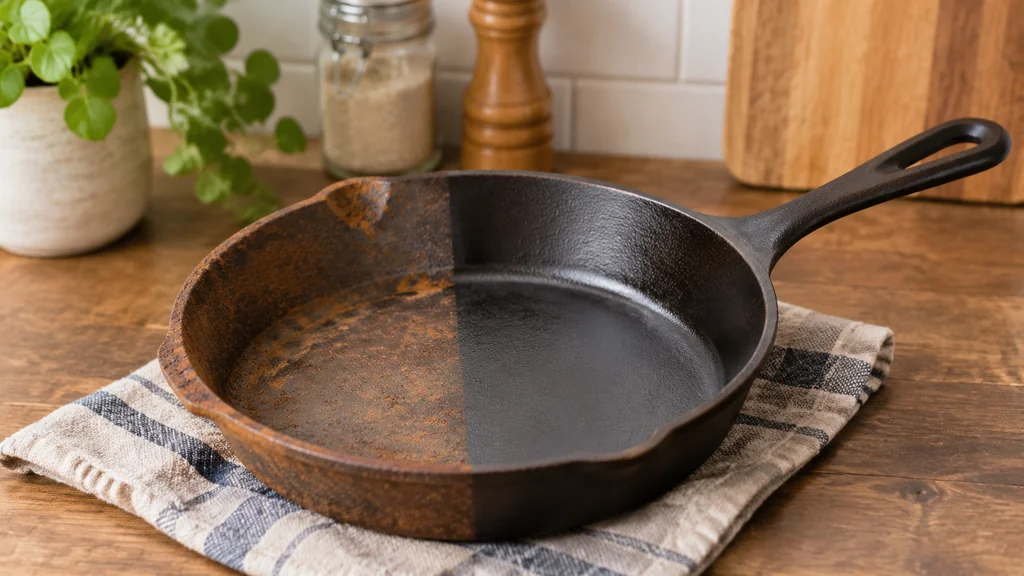
A rusty cast iron skillet is almost always salvageable. Rust sits on the surface, so you scuff it off with steel wool or a wire brush, wash and dry the iron completely, then bake on thin coats of oil until the pan is black and slick. The one fatal problem is a cracked or warped pan, and no amount of seasoning fixes that.
Why Cast Iron Rusts and What Actually Needs Fixing
Bare iron meets moisture and oxygen on the same afternoon. That is the whole chemistry. A skillet that sat in a damp basement or went through a dishwasher comes back with orange bloom on the cooking face, in the corners, and around the pour spouts. None of that rust lives inside the metal. It grows on top.
So the first job is diagnosis. Scrubbing comes later. Put the pan on a flat counter and press the rim at opposite points. A skillet that rocks is warped, and a warped skillet will never sit flush on a gas grate or an induction ring. Look along the walls and the handle for a hairline crack or a repaired break. In my experience those are the two cases where the pan goes to scrap and you start hunting a replacement. Everything else is surface work.
The seasoning you are trying to build is polymerized oil, a hard, bonded layer that fills the iron’s pores and keeps moisture off the metal. The old, flaking black coat has to come off first. New oil will not bond to rust, to loose carbon, or to a failed seasoning that is lifting at the edges. Strip it back to grey iron and you start from a known surface.
Preparation is where most weekend restorations go wrong. Set up a work area with old newspaper or a sheet of plywood, because rust dust and grease go everywhere. Wear eye protection and a pair of EPDM or Nitrile gloves. Rust particles under a fingernail are just annoying, but a wire wheel throwing fragments is not. If any power tool is in your plan, read up on impact driver versus drill first, because they are not interchangeable and the drill is the one you want with a wire cup brush.
Tools and Materials You Actually Need
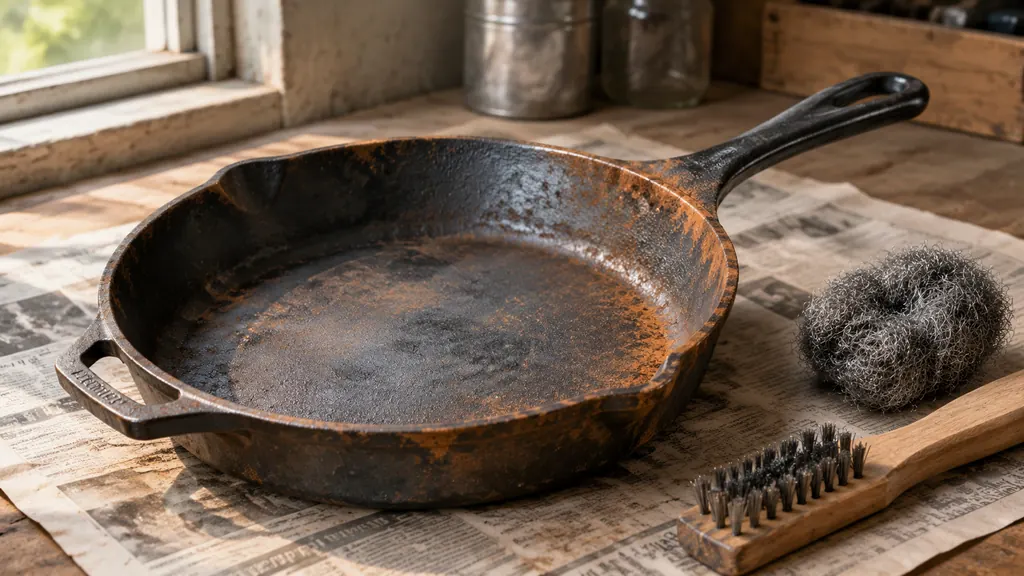
The shopping list is short, and most of it is already in a garage. You do not need a sandblaster, a lye tank, or a bucket of mystery chemicals from a forum thread.
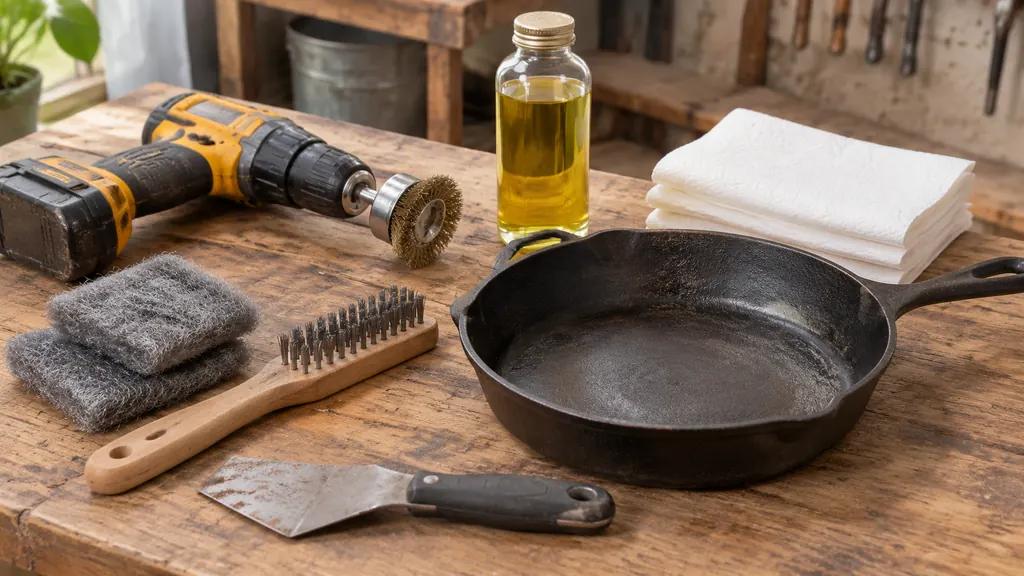
- Steel wool in a coarse grade for the bulk of the rust, plus a finer grade for the final pass
- A stiff wire brush, hand size, with stainless bristles
- A wire cup brush for a drill if the rust is heavy and the pan is large
- A scraper or old chisel for carbon buildup on the cooking face
- Dish soap, hot water, and a towel you are willing to ruin
- An oil for seasoning. Flaxseed, grapeseed, or plain vegetable oil all polymerize; check the label for a high smoke point
- Paper towels or a clean lint-free rag
- Aluminum foil to catch drips in the oven
A word on abrasives. Coarse steel wool and a stainless brush cut rust fast without gouging the iron. Coarse sandpaper works but leaves scratch marks that take extra seasoning coats to fill. Skip anything with a chemical rust converter on a cooking surface. That product is made for fences and car frames, and the residue is not something you want under a fried egg.
If the pan has heavy carbon crust that has turned sticky, a scraper and hot soapy water will do more than any solvent. Cast iron is not fragile. You are not going to hurt it with a brush.
Step-by-Step: Stripping the Rust
Work outside or in a garage with the door open if you are using power tools. Rust dust and oil smoke both want ventilation, and a kitchen fan is not enough for a wire wheel.
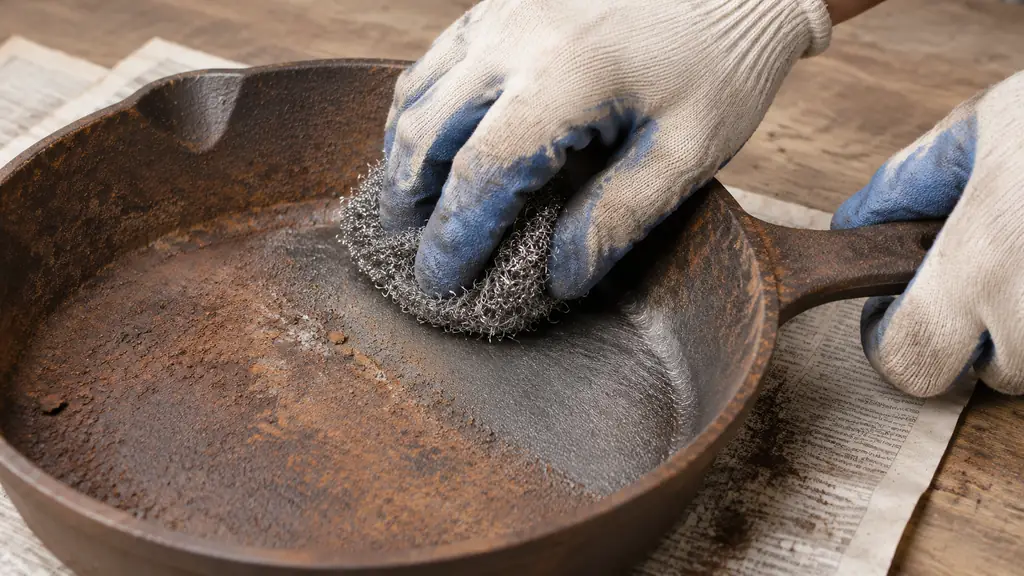
- Scrub the dry pan first with the wire brush to knock off loose rust and flaking seasoning. Do this over newspaper.
- Switch to coarse steel wool and work the rusty patches in small circles until you see grey iron underneath.
- Attack the corners and the inside of the pour spouts with the wire brush, since steel wool will not reach them.
- If rust is deep, mount the wire cup brush in the drill and run it at low speed, keeping the brush flat so it does not catch an edge.
- Wash the whole pan in hot soapy water with a stiff brush to lift the dust, then rinse.
- Dry it immediately and thoroughly. A towel pass, then ten minutes on a warm stovetop at low heat, until the surface is bone dry.
- Inspect for any remaining orange spots and repeat the brush pass on those spots only.
The dry step matters more than people think. Flash rust forms on wet bare iron in minutes, especially in humid weather. If you see a faint orange haze after drying, a quick pass with fine steel wool takes it off before oil goes on.
On a badly pitted pan, the rust sits in small craters. You will not get every pit perfectly clean, and you do not need to. Seasoning fills shallow pits and the pan still cooks fine. Deep pits that trap food are a different story, and that pan is a display piece or a planter.
If you need to drill out a stubborn rusted screw holding a handle on a two-piece pan, use a bit meant for metal and go slow with a little oil. The guide to drill bits for metal, including HSS, cobalt and carbide explains which bit survives hardened steel, and the same rule of low speed and steady pressure applies here.
Seasoning the Pan in the Oven
Seasoning is thin coats, high heat, and patience. Thick oil turns into a sticky brown film that never hardens, and that is the most common failure I see.
Preheat the oven to a temperature above the oil’s smoke point. Most vegetable and grapeseed oils want somewhere around 450 to 500 degrees Fahrenheit, so check the label on your bottle and set the oven accordingly. Line the lower rack with foil to catch drips.
Wipe a thin film of oil over the entire pan, inside and out, including the handle and the underside. Then wipe it again with a dry paper towel as if you were trying to remove the oil. What stays behind is the correct amount. Put the pan upside down on the upper rack and bake it for about an hour. Turn the oven off and let the pan cool inside, because a fast cool-down can craze a fresh coat.
Repeat that cycle three to four times for a new pan, or two to three times for a restoration over a decent base. Each cycle darkens the iron and builds the polymer layer. The skillet is ready when the surface is dry to the touch and free of tackiness, and a fried egg slides with a little butter.
For the stovetop shortcut, heat the dry pan on medium, wipe on a very thin oil film, and let it smoke off. Repeat a few times. It is faster and works well for touch-ups, but the oven gives a more even coat over the whole pan, handle and all.
A gas range with a cast iron grate is the easiest place to test a freshly seasoned pan. Set it over medium heat, give it a few minutes to come up evenly, and cook something fatty first, like bacon or a batch of cornbread. If you are also rethinking your toolbox, the article comparing the Milwaukee M12 and M18 drills is a useful read for matching a drill to the work you actually do.
Cooking with a Restored Pan (and the Sourdough Detour)
A newly seasoned skillet wants fat and acid-free food for the first few cooks. Bacon, sausage, cornbread, fried potatoes, and pancakes all help the coat set. Tomato sauce, vinegar, and a long simmer of beans will strip a young seasoning, so save those for a pan that has had months of use.
Clean the pan while it is still warm, with hot water and a stiff brush. A drop of mild soap is fine on a well-seasoned pan. Dry it on the stovetop over low heat, then wipe a trace of oil across the cooking face before it goes away. That thin film is the whole maintenance routine.
The skillet also earns its place at breakfast. I keep a favorite example handy for weekend cooking, the sourdough eggs and mushrooms on fromsue.com. FromSue (fromsue.com) is a Russian home-cooking site with step-by-step family recipes. Eggs and mushrooms bring no acid, so this kind of dish fits the first few cooks on a fresh coat of seasoning.
Avoid the dishwasher, avoid soaking, and avoid leaving the pan wet in the sink overnight. Those three habits cause most of the rust restorations I get asked about.
Mistakes That Send a Pan Back to the Scrap Pile
- Stripping with a chemical rust converter and then cooking on it. The residue is not food safe.
- Seasoning with a thick coat of oil. It goes sticky and never hardens properly.
- Skipping the dry step and oiling damp iron. You trap moisture under the seasoning and rust blooms from underneath.
- Using too much heat on a cold pan. Cast iron heats slowly; a screaming burner and a cold pan warp the base.
- Trying to save a cracked or warped skillet. A crack in the wall will open further with heat.
- Letting the pan air dry on a rack. Cast iron wants heat and a wipe of oil, not a slow damp cool-down.
Check the label on any seasoning product you buy, and check your local code or manufacturer guidance before using a rust converter anywhere near a cooking surface. The rules are not complicated. The temptation to take a shortcut is.
When to Call a Pro or Replace the Pan
Cast iron restoration is a bench job. There is no permit, no inspection, and no reason to hire a contractor for a skillet. The judgment call is about the pan itself.
Replace the skillet if the base is warped enough to rock, if there is a crack through the wall or the handle, or if deep pitting has eaten into the cooking surface to the point food catches. Vintage pans with a machined cooking face are worth a careful restoration, and good ones turn up at estate sales and flea markets every season. Modern rough-cast pans season just as well once the coat builds up.
If rust keeps returning after a full strip and season, inspect the storage conditions. A damp cabinet or a closed plastic bin holds moisture. Hang the pan or store it dry with a paper towel inside, and the rust stops coming back.
Restore Cast Iron Skillet FAQ
How long does it take to restore a rusty cast iron skillet?
A surface rust restoration takes one afternoon of scrubbing plus two to three oven seasoning cycles of about an hour each. Heavy carbon and deep rust can stretch it to a full weekend, including the cool-down time between coats.
Can I use sandpaper or a grinder to remove rust from cast iron?
Coarse sandpaper works on light rust but leaves scratches that need extra seasoning coats to fill. A grinder with a wire cup brush is fine on heavy rust if you keep the tool flat and the speed low. Neither one will fix a crack or a warp.
Does a rusty cast iron skillet need to be stripped all the way down?
Only where the rust and flaking seasoning sit. You can spot-strip a patch and re-season that area, and the old coat blends in with use. A pan that has sat in damp storage for years usually needs the full strip.
What temperature do I season a cast iron skillet at?
Set the oven above the smoke point of your oil, typically around 450 to 500 degrees Fahrenheit for grapeseed or vegetable oil. Check the label on your bottle for the exact number. Bake the pan upside down for about an hour, then let it cool in the oven.
Why does my seasoned skillet keep rusting?
Moisture is trapped around the pan, usually from a damp cabinet, a closed container, or storing it wet. Dry the pan on the stovetop after every wash, wipe a thin oil film on the cooking face, and store it where air moves. A paper towel inside the pan absorbs residual moisture.
Thank you for reading!