
Advertising house cleaning services works best when you treat it like a job site. Measure first, then build. Claim your local listing, collect real reviews, publish useful content, and track every enquiry so you know which channel pays for itself. The steps below cover the whole sequence, from setting a budget to reading the numbers at the end of the month.
Start With a Clear Objective and a Realistic Budget
Before you spend a dollar, write down what the campaign is supposed to do. “Get more clients” is not an objective. “Fill Tuesday and Wednesday mornings in the next two months” is one you can measure.
Pick one primary goal per quarter. Choose from these options:
- Awareness — people in your area recognise the name.
- Leads — phone calls, form fills, booking requests.
- Repeat business — past clients rebook or move to a recurring plan.
Then set a budget you can sustain for at least three months. Advertising that stops after two weeks tells you nothing. A small, steady spend beats one big push before the season and silence afterwards.
Know who you are talking to. Busy professionals want online booking and a fixed price. Families with young children care about non-toxic products and background checks. Older homeowners often prefer a phone call and a familiar voice. The same ad will not move all three groups.
Claim and Tune Your Local Search Presence
Most house cleaning searches start with “near me” or a suburb name. If your local business profile is thin, you are invisible at the exact moment someone is ready to book.
Work through this checklist. Start by claiming your listing:
- Claim your listing and verify the address.
- Add the service area, hours, phone number and a booking link.
- Upload real photos of your team, your van and finished rooms.
- Ask every happy client for a review, and reply to each one.
- Keep the name, address and phone number identical everywhere they appear online.
Consistency matters more than clever wording. A mismatched phone number across directories confuses both customers and search engines.
Use Social Media for Proof, Not Noise
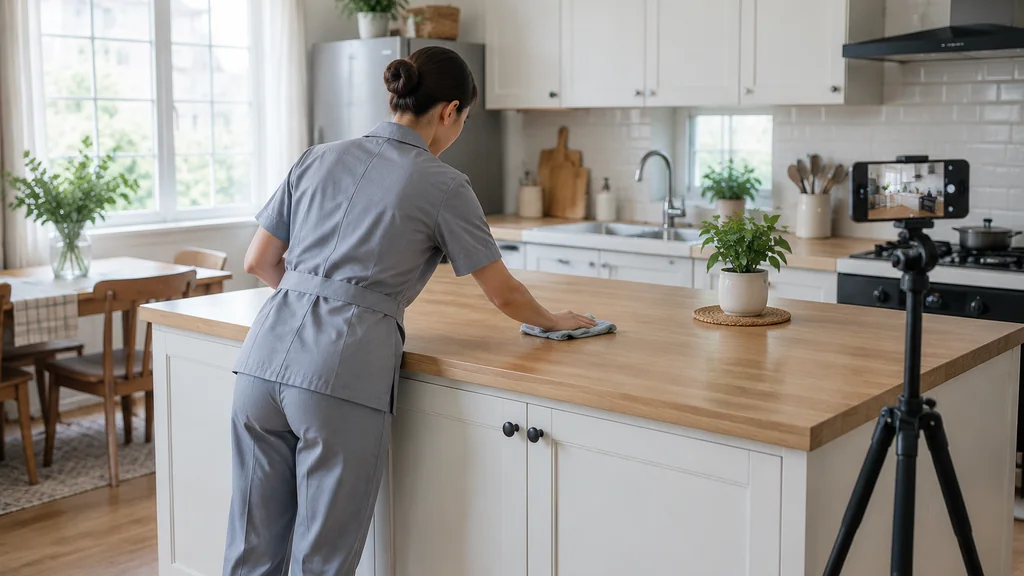
Social media earns its keep when it shows the work. A short clip of a grout line going from grey to white beats a graphic with a slogan every time.
Put the effort into these channels. Instagram and Pinterest suit before-and-after photos and quick cleaning tips.
- Instagram and Pinterest suit before-and-after photos and quick cleaning tips.
- Facebook groups for your town or neighbourhood reward members who answer questions helpfully before they ever mention a price.
- Paid social ads let you target a radius around your base, which keeps wasted spend down.
Post consistently. Two useful posts a week, every week, will outrun a burst of ten posts in one weekend. Keep captions plain and local. Naming the suburb and the type of job tells people you actually work there.
Build Content That Answers Real Cleaning Questions
Content marketing is slow and cheap. It also compounds, because a good answer keeps bringing people in long after you publish it.
Write about what clients actually search for. Topics include:
- How to remove a specific stain from a specific surface.
- What a deep clean includes that a standard clean does not.
- How to prepare a house before the cleaner arrives.
- Seasonal checklists for spring and the run-up to the holidays.
A downloadable checklist in exchange for an email address builds a list you can market to later. One caveat from the workshop side of my own work. If you write about equipment, get the details right. A post about cutting fitted panels earns trust the same way a clean kitchen does, so link to a proper comparison of a track saw and a table saw for sheet goods and a Table Saw Buying Guide: Contractor, Hybrid or Cabinet for accurate equipment details.
Turn Reviews and Referrals Into Your Best Ad
A recommendation from a neighbour outperforms any paid ad you can buy. Build the ask into the job.
- Send a short review request the same day you finish a clean.
- Offer a simple referral credit to existing clients, and state the terms clearly.
- Keep a page of written testimonials with first names and suburbs.
- Film a thirty-second walkthrough with permission, and blur anything personal.
Safety comes first here. Never publish a client’s address, alarm code or photos of valuables. Get written permission before any interior footage goes online, and keep the same discipline you would with a client’s keys.
Partner With Local Businesses and Show Up in Person
Other local trades already talk to the homeowners you want. A handyman, a real estate agent or a moving company can hand your card to someone at exactly the right moment.
These local partnerships can take several forms. You can:
- Leave cards with letting agents and property managers.
- Offer a move-in or move-out clean package to local movers.
- Take a stall at a community fair and run a small demo.
- Sponsor a school or club event with a clearly stated, modest contribution.
Offline advertising still works because it is personal. A face and a firm handshake at a Saturday market does what a banner ad cannot.

The Main Steps, in Order
- Define one measurable goal and a three-month budget.
- Claim and complete your local business listing with photos and hours.
- Ask your last twenty clients for reviews and reply to every one.
- Set up two social channels and post real before-and-after work weekly.
- Publish one useful article or checklist each month.
- Approach three local businesses about cross-promotion.
- Book one community event per season.
- Review enquiries, bookings and cost per client every month, then cut what fails.
Run these in sequence. Each step feeds the next, and you will see which ones carry their weight before you add more.
Measure What Matters and Adjust
Track a small set of numbers and ignore the rest. New enquiries, website visits, social engagement, review count and the share of enquiries that become booked jobs will tell you almost everything.
Keep a simple sheet with a column per channel. At the end of each month, compare cost against booked work. If a channel produces enquiries that never convert, the offer or the response time is usually the problem. Answer the phone quickly and quote clearly, and the same spend will perform better.
When a post or ad does well, make more like it. When one flops, change one variable at a time so you learn what actually moved the needle. Patience here separates the businesses that last from the ones that quit in month two.

House Cleaning Advertising FAQ
How do I advertise house cleaning services on a small budget?
Start with the free channels. Claim your local listing, ask for reviews and post real photos of finished work. Add a modest paid spend only once you know which enquiries turn into bookings.
Which advertising channel brings cleaning clients fastest?
Local search usually converts quickest, because the person is already looking for a cleaner nearby. Social media and content build more slowly but keep working for months.
How many reviews do I need before advertising pays off?
There is no magic number. A steady flow of recent, specific reviews reassures people more than a large pile of old ones, so ask after every job and keep them current.
Should I offer discounts to win new clients?
A first-clean discount can work, but be careful it does not attract one-off bargain hunters. A referral credit to existing clients often brings better long-term customers.
How do I know if my advertising is working?
Track enquiries, bookings and cost per booked job for each channel every month. If a channel costs more than the work it brings in, change the offer or drop it.
Can I advertise cleaning services without a website?
You can, using a local listing and social pages. A simple site still helps, because it gives you one place to send people and one place to collect enquiries.
Thank you for reading!