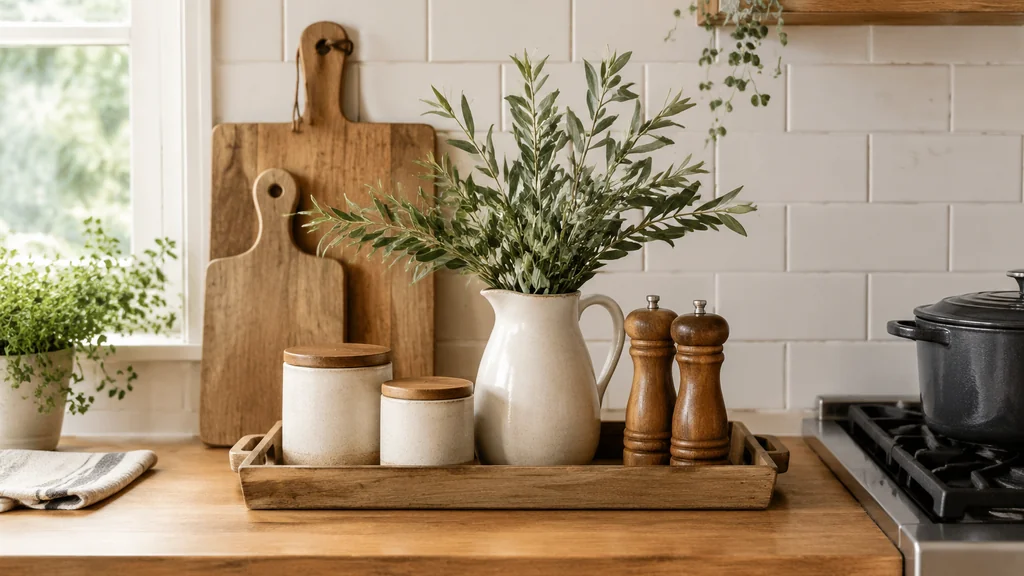
Decorative accessories for kitchen rooms work best when every piece does a job as well as it looks. A fruit bowl holds fruit, a tray corrals oil and salt, a rug softens a hard floor. Style comes second, and it comes almost free once the practical layer is right.
That order matters more in a small kitchen than a large one. When the counter is short, a decorative object that only looks good is a liability. The sections below cover how to choose, place and maintain pieces that pull their weight, plus the mistakes that make a compact kitchen feel cramped.
Start With The Surfaces You Already Have
Before you buy anything, clear the counters completely. Wipe them down, then stand back and look at what is left. Most kitchens have more usable surface than the clutter suggests, and the empty version tells you where a decorative piece will actually fit.
Work through the room in this order:
- Counters first, because they set the limit on everything else.
- Walls second, since open shelves and art add storage without stealing worktop.
- Floor last, where a runner or small rug adds color without touching the counters at all.
Write down the measurements of each clear stretch before you shop. A bowl that looks modest in a store can swallow a narrow prep zone, and returning heavy ceramics is nobody’s idea of a good Saturday.
The Main Steps For Styling A Kitchen With Accessories
- Clear every counter and shelf, then clean the surfaces so you can see the real space.
- Measure each clear stretch and note the height under the upper cabinets.
- Sort what you already own into working items and display-only items.
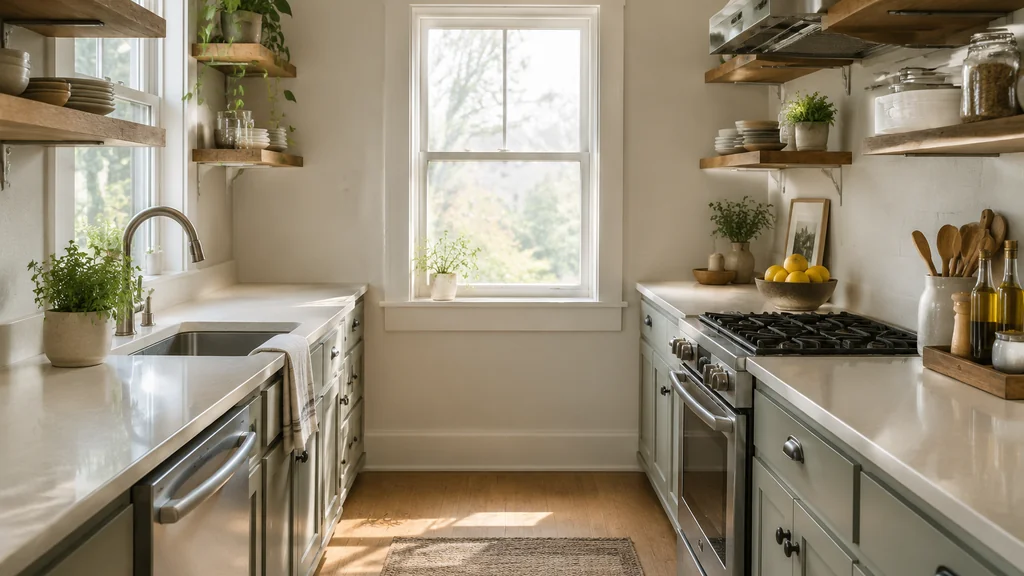
- Choose two or three materials and repeat them across the room, such as wood, glass and brass.
- Group small items on a tray so they read as one object instead of six.
- Place the largest piece first, then build smaller items around it.
- Move anything you use daily within arm’s reach of the prep area.
- Live with the arrangement for a week before buying anything else.
That pause can help you decide whether you need more accessories. A week of cooking can show you which pieces are in the way.
Materials And Finishes That Age Well
Repeat two or three materials through the room to give the space a cohesive look. Wood, glass, ceramic and unlacquered brass all improve with handling, which is why they show up in kitchens decade after decade.
| Material | Where it works | What to watch |
|---|---|---|
| Wood | Trays, boards, stools | Keep dry, oil occasionally |
| Glass | Jars, canisters, cabinet doors | Shows dust, needs tidy contents |
| Ceramic | Bowls, crocks, planters | Chips at the rim if stacked hard |
| Brass | Faucets, hooks, pendant fittings | Patinas, which is the point |
Avoid mixing more than one strong metal finish in a small room. Brushed nickel next to polished brass next to black steel reads as noise, and the eye has nowhere to rest. Pick one and let the wood and ceramic carry the warmth.
If you are building your own shelf or tray, the cutting is where the project succeeds or fails. A track saw makes clean work of sheet goods, and our comparison of a track saw versus a table saw for sheet goods explains which one suits a small shop.
Lighting And Fabric Accessories
Light fixtures and textiles do more for a kitchen than any ornament on a shelf. A pendant over a sink or island adds a focal point at eye level, where the room is otherwise empty. Fabric softens sound as well as looks, which matters in a room full of hard tile and stone.
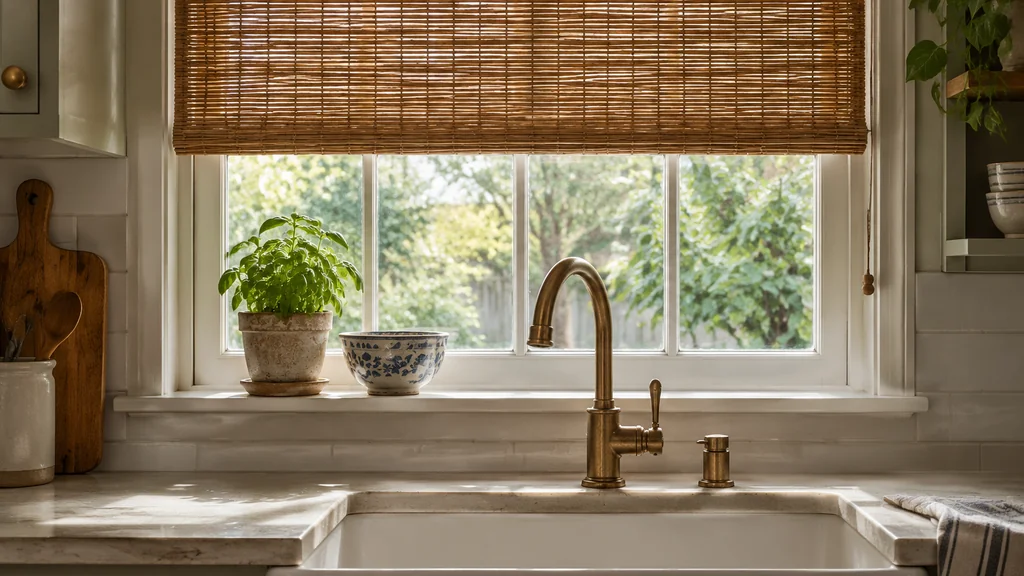
For window treatments, keep them simple. A Roman shade or a woven blind filters glare while still letting daylight through, and it takes up none of your counter. Heavy drapes in a kitchen collect cooking grease and are difficult to clean, so leave them in the living room.
Rugs need the same honesty. A runner along the main walkway protects the floor and adds pattern, but it must be machine washable or it will not survive a working kitchen. Check the label before you buy, and use a non-slip pad underneath.
Small Kitchen Mistakes To Avoid
The most common error is treating the kitchen like a display case. Every horizontal surface becomes a shelf, and the room stops functioning. Storage you can reach beats storage that looks styled.
Other mistakes I see often:
- Hanging art where a cabinet door will swing into it.
- Putting glass-front cabinets over a messy interior, which highlights the mess.
- Choosing open shelving without planning what goes on it.
- Buying a bowl or tray too large for the counter it will sit on.
- Ignoring the color of the backsplash when picking small accessories.
Low-contrast color schemes help a compact kitchen feel larger. Slight differences between walls, cabinets and trim create a gentle flow across the room. If you want a bold accent, put it in one place and let the rest stay quiet.
Cleaning And Maintenance That Keeps Accessories Looking New
Decorative pieces in a kitchen live in a greasy environment, so plan for cleaning from the start. Anything porous and unsealed will absorb cooking oil and hold onto smells.
A few habits keep the room looking sharp:
- Wipe trays and boards with a damp cloth after cooking, not once a month.
- Wash fabric items on the schedule on the care label, not when they look dirty.
- Keep metal polish away from unlacquered brass if you want the patina.
- Empty and rinse vases and jars before storing them.
- Check hanging items periodically for loose hooks and anchors.
If a piece is hard to clean, it will end up in a cupboard. That is a good reason to leave it in the store.
When To Call A Pro
Styling is a homeowner job. Changing a light fixture is not always one. If the circuit is not clearly dead, or the box is not rated for the fixture weight, stop and call a licensed electrician. Check applicable local requirements for anything installed near a sink. Check the label on the fixture and your local code before you drill.
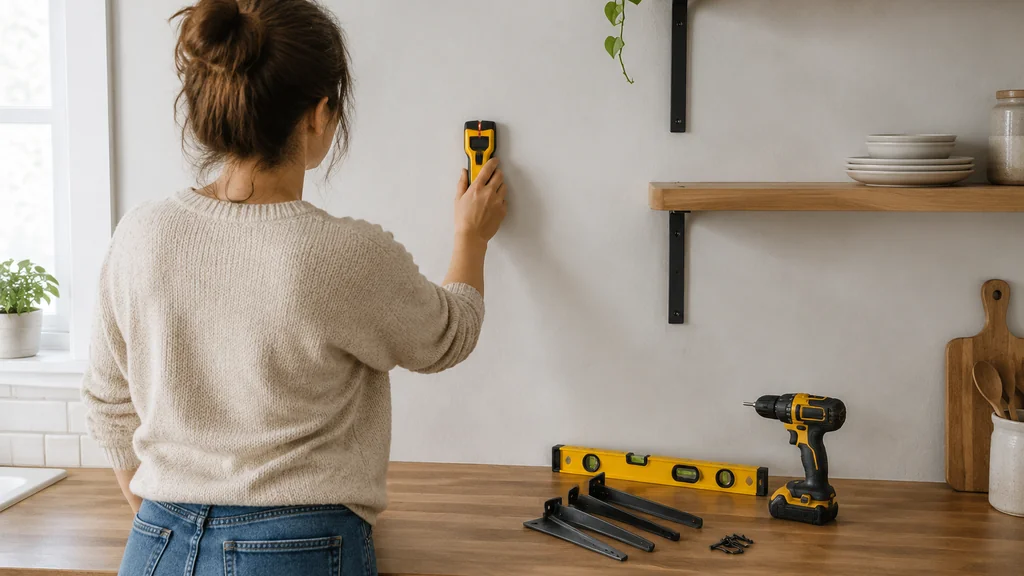
The same caution applies to anything structural. Adding open shelving to a plaster wall, moving a cabinet, or hanging a heavy pot rack needs proper anchors and, in some cases, blocking behind the wall. If you are unsure what is behind the surface, a stud finder and a small exploratory hole cost less than a collapsed shelf.
For cutting your own shelves, trays or a small island top, the tool matters as much as the technique. Our table saw buying guide for contractor, hybrid and cabinet models walks through the differences, and if you work alone, it is worth understanding how a SawStop brake works and what it costs before you commit to a machine.
Decorative Accessories For Kitchen FAQ
How many accessories should a small kitchen have?
Fewer than you think. Aim for one grouping per clear surface and nothing on the rest. If you can lift a whole group with one hand, it is the right size, and you can move it aside to clean in seconds.
Do open shelves work in a small kitchen?
They do, if you plan the contents first. Open shelves draw the eye deeper into the wall and make the room feel wider, but they show everything, so keep only what you use and like. Clutter on open shelves makes a compact kitchen feel smaller.
What colors make a kitchen look bigger?
Low-contrast schemes work best. Keep walls, cabinets and trim within a few shades of each other so the eye does not stop at hard edges. White reflects light well, but a soft gray-green or warm off-white does the same job with more character.
Can I hang art in a kitchen?
Yes, away from the cooking zone. Steam, grease and splatter ruin paper and canvas over time, so keep art on walls away from the range and sink. A framed print above a small desk or bench area holds up far better than one beside the hob.
Are rugs a good idea in a kitchen?
A washable runner is, and a wall-to-wall carpet is not. Kitchens produce crumbs, spills and grease, so choose a rug you can machine wash or hose down. Add a non-slip pad, and check the care label before you commit.
Thank you for reading!